Last updated November 22, 2026
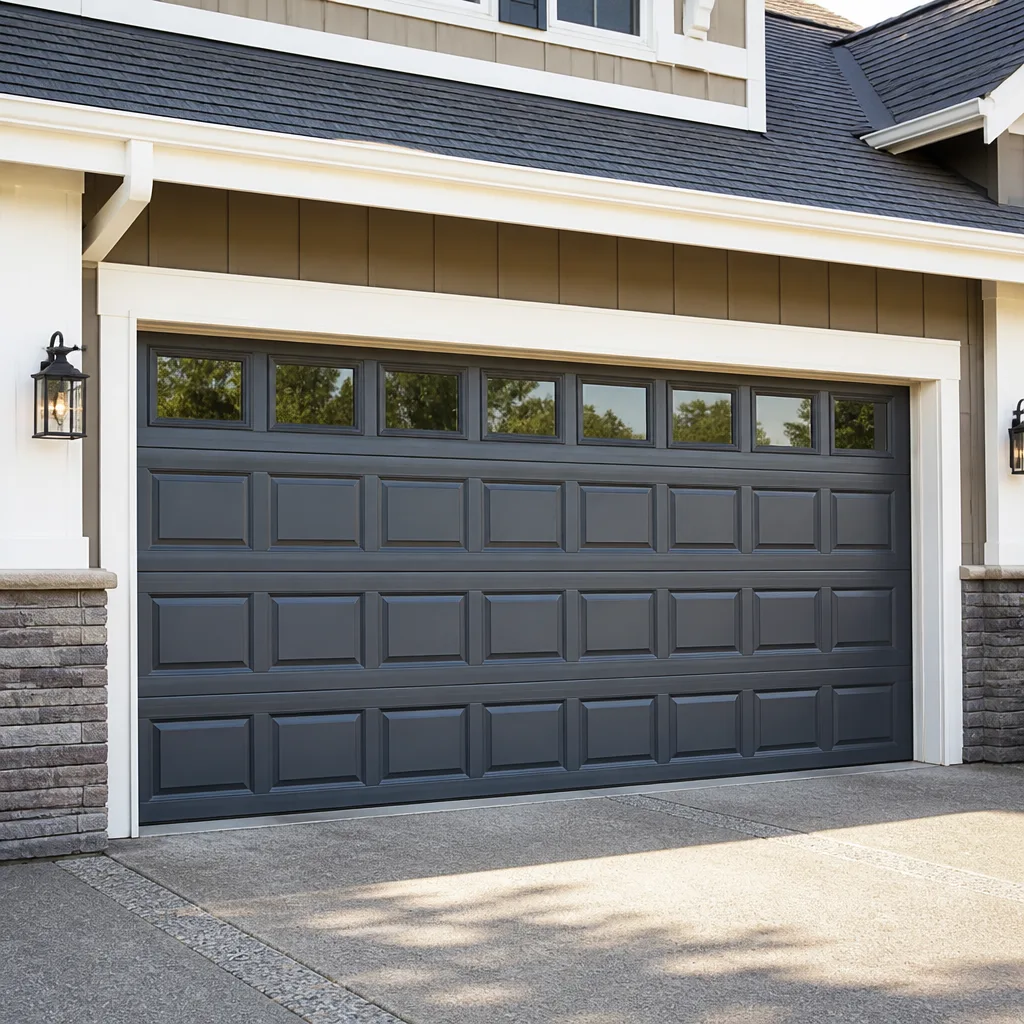 Raised-panel steel
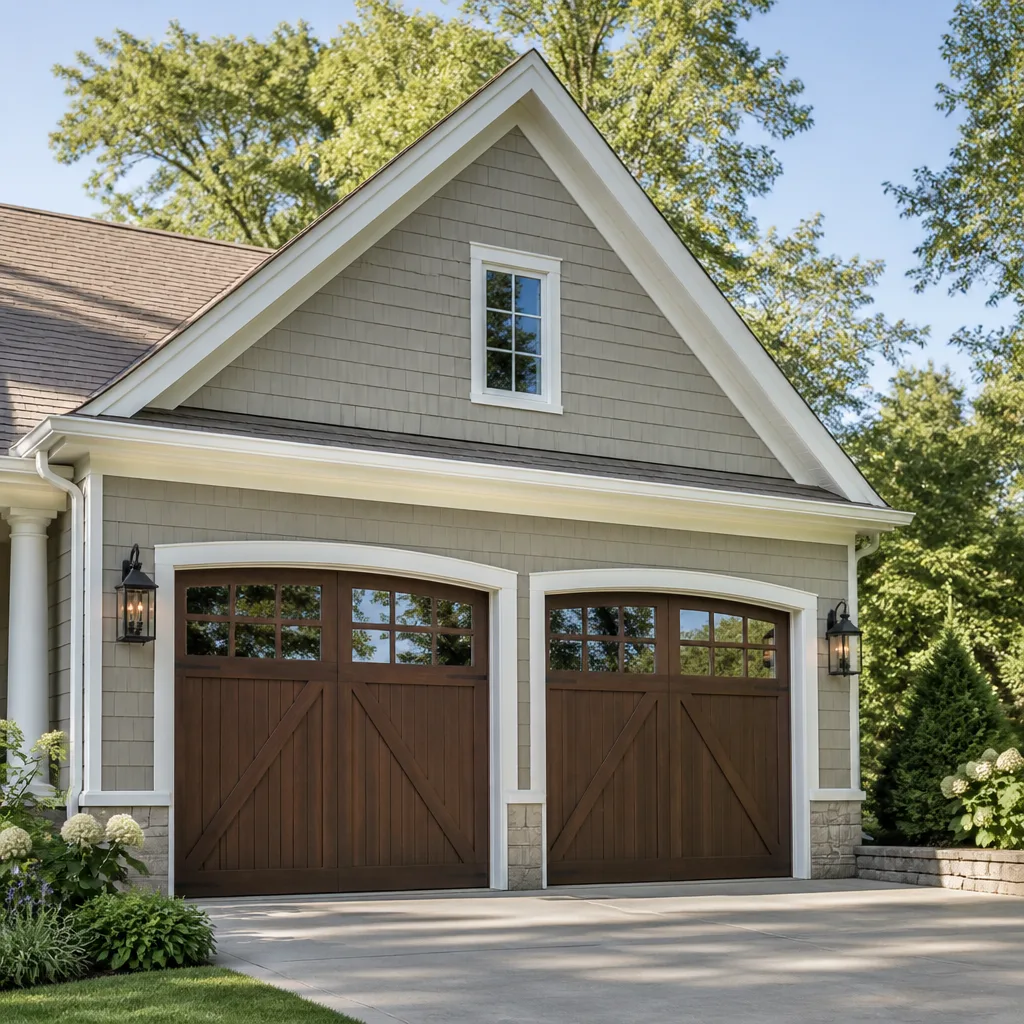 Carriage house
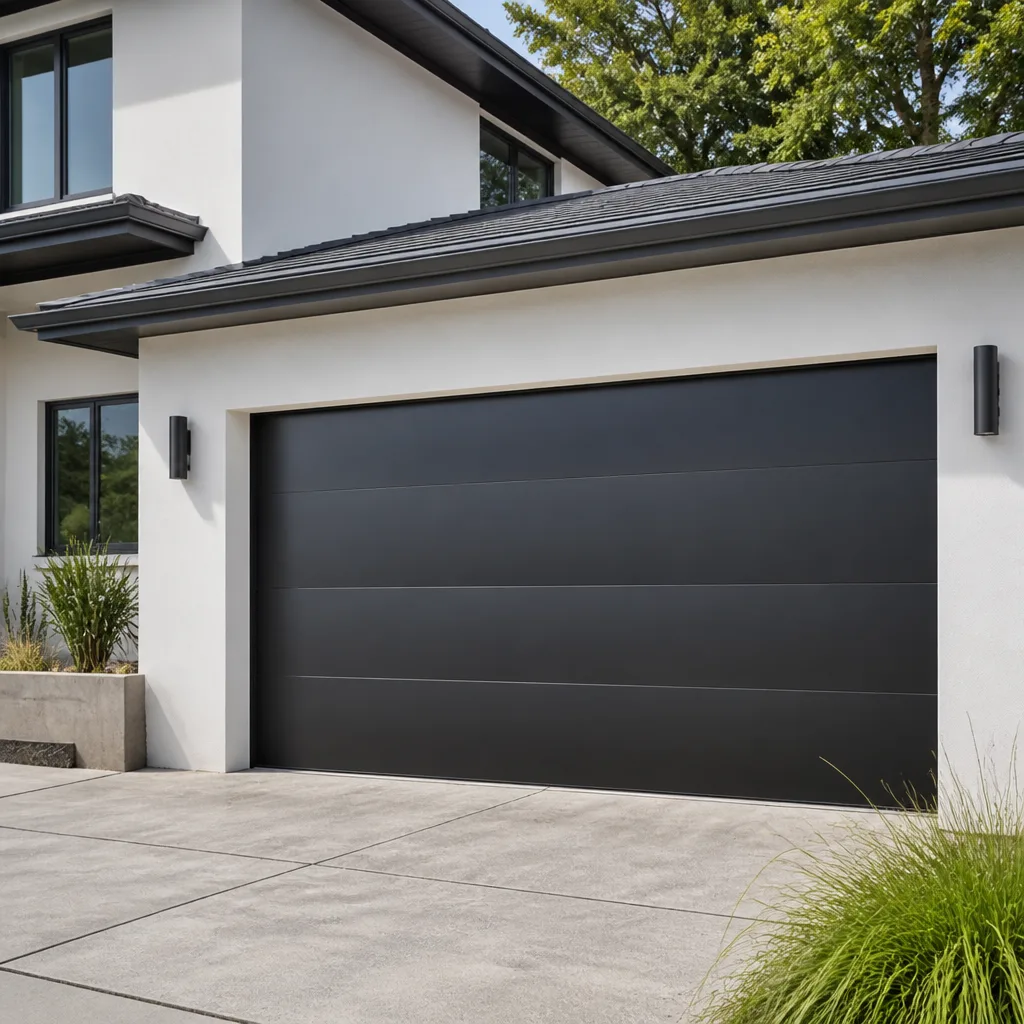 Modern flush
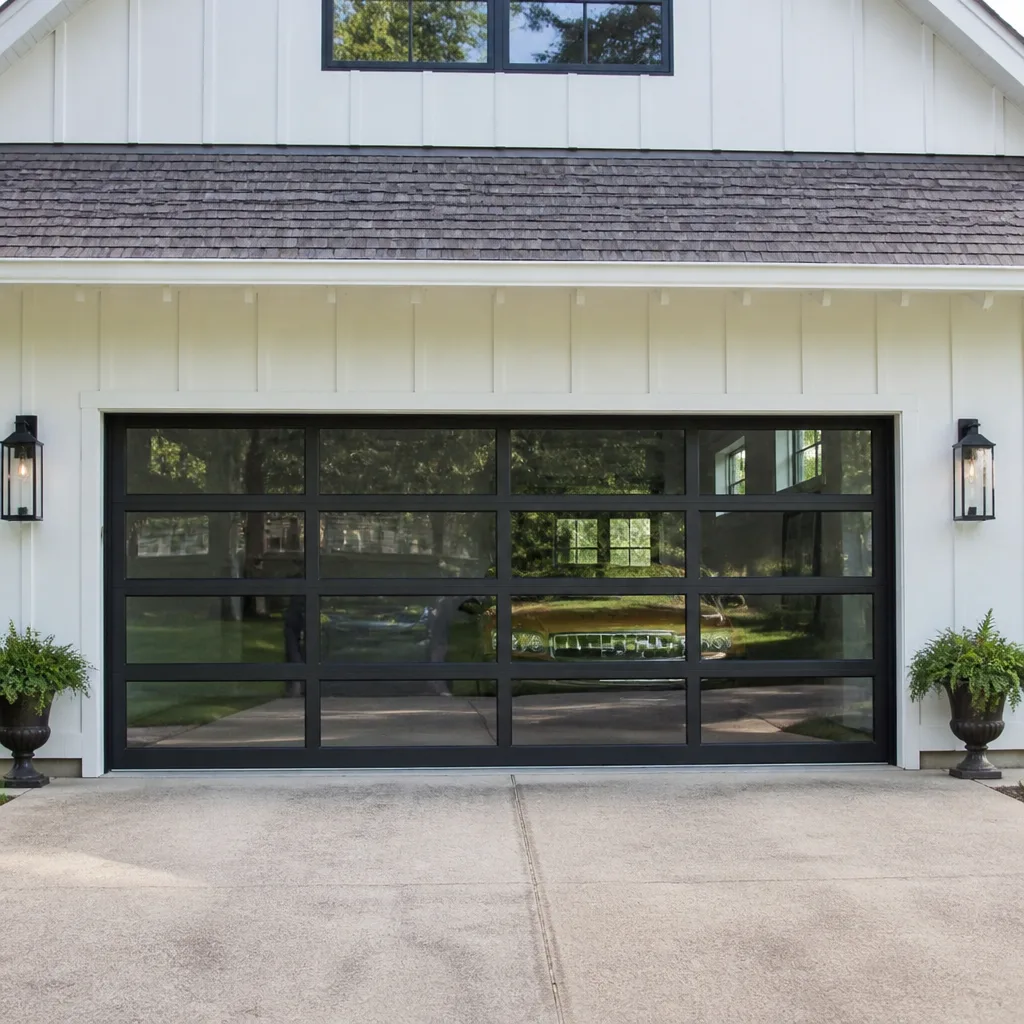 Full-view glass
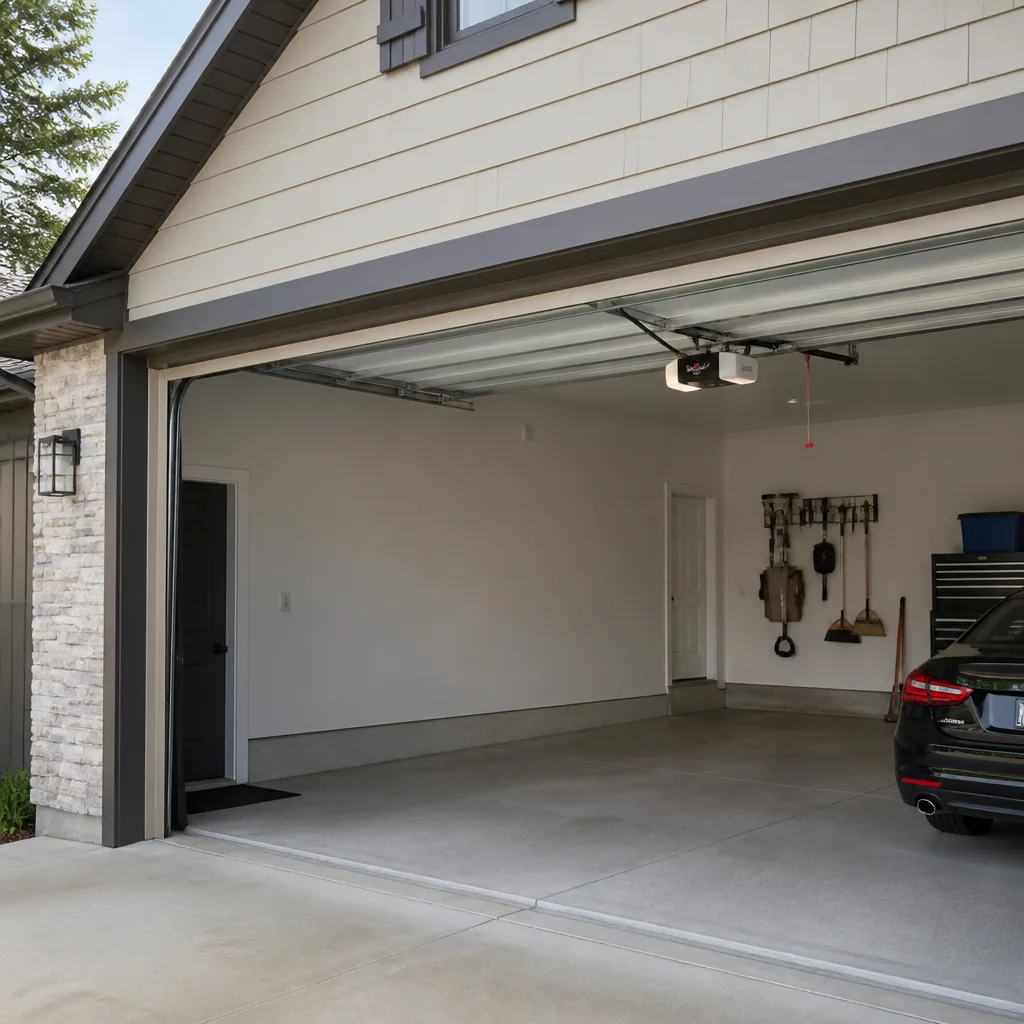 LiftMaster openers
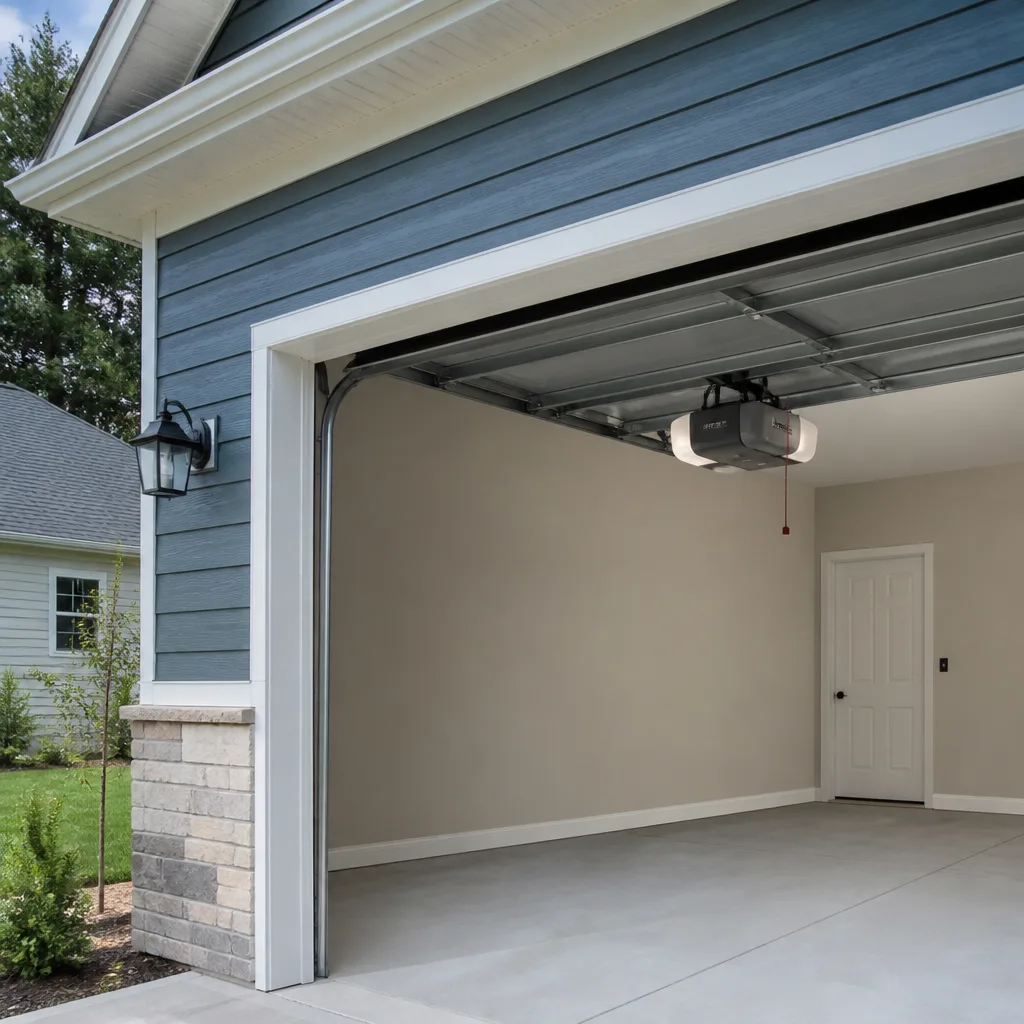 Chamberlain openers
Full 25-point door and opener safety check with every visit - springs, cables, rollers, tracks, and your LiftMaster or Chamberlain opener included
You get a price before we start. It does not change when the pro arrives.
Get your free estimateThe Complete Guide to Garage Doors in North Fort Myers
Most garage door guides are written for Chicago or Phoenix. They talk about freeze-thaw cycles, road salt on the panels, and winters that crack rubber seals. None of that describes what happens to a door in North Fort Myers, where the enemy isn’t cold – it’s the wet, warm, salty air that hangs around most of the year. Doors here corrode from the inside out, springs lose tension in a way that surprises transplants, and weatherstripping that would last a decade up north starts breaking down in a few short years. This guide covers what actually happens to garage doors in North Fort Myers, which materials survive Lee County conditions best, what the building code expects, and how to get the most years from the system in your home.
Quick Answer
Garage doors in North Fort Myers fail faster than the national manufacturer estimates because of year-round humidity, salt air, and storm-season wind exposure. Steel doors need heavier corrosion protection here, springs, cables, and bottom brackets are the first parts to show climate wear, and residential doors must meet Florida wind-load requirements. Choosing the right material and keeping up with lubrication and inspection is what separates a door that lasts from one that fails early.
Styles & brands we work with
- Raised-panel steel
- Carriage house
- Modern flush
- Full-view glass
- LiftMaster openers
- Chamberlain openers
Table of Contents
- Why Garage Doors Fail Faster in North Fort Myers
- How Humidity and Salt Air Attack Springs, Cables, and Bottom Brackets
- Which Door Materials Hold Up Best in Lee County’s Climate
- Florida Building Code Requirements for North Fort Myers Garage Doors
- Standard Openers vs. What Survives a Florida Storm Season
- Realistic Component Lifespan in This Climate vs. National Estimates
- A Maintenance Routine Built for North Fort Myers
- What Garage Door Work Typically Costs in North Fort Myers
Why Garage Doors Fail Faster in North Fort Myers
Homeowners who move to North Fort Myers from drier parts of the country often assume the door in their new house is in decent shape. Then a spring snaps two years in, or the door starts grating on its tracks, and they wonder what went wrong. Nothing went wrong – the local climate simply works on a different timeline than the one the manufacturer’s manual describes.
North Fort Myers sits in a warm, humid corridor where the air holds moisture most of the year. That moisture does two quiet things. First, it feeds surface corrosion on every metal part that isn’t protected against it. Second, it works into the joints and seams of the door itself, where lubrication gets washed out and grit collects. The moving parts that fail first are always the ones nobody sees: the torsion springs above the door, the cables that run down each side, and the bottom brackets that anchor everything.
Then there’s storm season. From roughly June through November, the region deals with heavy rain and the wind events that come with it. A door that’s slightly out of balance, has a loose hinge, or rides on worn rollers doesn’t just squeak during that stretch – it flexes under loads it wasn’t handling well to begin with. Small problems compound through the wet months and surface as a hard failure later.
What does all of this mean for a North Fort Myers homeowner? Treat the door as a system that needs inspection on a local schedule, not a national one. What we see here is that doors that get a check and lubrication once or twice a year hold up far better than doors left alone until something breaks. If your door is already showing wear, our Garage Door Repair North Fort Myers team can look at it before a small issue becomes an urgent call.
How Humidity and Salt Air Attack Springs, Cables, and Bottom Brackets
Salt air is the part of the North Fort Myers climate that catches people off guard. Even away from open water, humid air in this region carries enough salt and moisture to accelerate corrosion on exposed metal. It doesn’t happen overnight. It happens steadily, in the exact places that are hardest to see.
Torsion and extension springs
Springs are the most mechanically critical and safety-sensitive part of any garage door. They’re also steel under constant tension, which makes them vulnerable to corrosion. Surface rust on a spring changes how it flexes and can lead to premature failure. In drier climates a spring might run for well over a decade; here, the corrosion timeline runs shorter.
Cables
The lift cables on each side of the door are braided steel, and braided steel traps moisture in the strands. A cable that looks fine from arm’s length can be quietly rusting from the inside. Frayed or corroded cables are a serious safety issue – never try to inspect or replace them yourself. A trained technician can spot the warning signs safely.
Bottom brackets
The bottom bracket anchors the cable at the bottom corner of the door, low to the ground where splash, damp concrete, and humid air all meet. It’s one of the first parts to corrode, and when it does, it puts stress on the cable and the door’s balance. If you’re seeing rust blooming at the bottom corners of your door, that’s worth a professional look.
Add humidity into the panels too. Steel skins and the joints between them collect condensation and grime, and if the paint is chipped, corrosion begins at that spot and spreads. Wax-based or silicone-based lubricants on the moving parts help, but they need reapplying more often here than a national maintenance chart would suggest. Our garage door spring repair specialists see this wear pattern constantly in North Fort Myers homes.
Which Door Materials Hold Up Best in Lee County’s Climate
If you’re replacing a door in North Fort Myers, the material choice matters more here than in a mild inland climate. You want something that resists corrosion, holds paint, and meets wind-load requirements without adding weight that strains the opener. Here’s how the main options stack up.
- Steel (24- or 25-gauge): The most common choice, and a good one if the steel is hot-dipped galvanized and finished with a proper paint system. Lighter gauges are more prone to dents and to corrosion once the finish is compromised. In this climate, gamble less on a light-gauge budget door.
- Steel with a heavier corrosion barrier: Some steel doors come with galvanized skins and a factory finish built for humid environments. These cost more up front but tend to hold up better against salt air.
- Aluminum: Won’t rust, which is a real advantage here, and it’s light enough to be easy on the opener. The tradeoff is that aluminum dents more easily and can feel less substantial, so consider a full-view or heavy extruded aluminum design for durability.
- Fiberglass: Resistant to corrosion and rot, and often chosen for its looks. Quality varies widely, so ask about the specific construction and how the panels are finished.
- Wood: Beautiful, but the most demanding here. Wood in a humid climate needs consistent sealing and refinishing, and it’s the material most likely to swell, warp, or absorb moisture if neglected.
When we advise homeowners on replacement in North Fort Myers, the conversation usually comes back to one question: how much door do you actually need? For most homes a quality galvanized steel door with a durable finish is the right balance of corrosion resistance, wind-load capability, and cost. If you want a specific look, brands like Clopay offer options across steel, aluminum, and wood-look designs so you’re not choosing between performance and appearance. Our garage door repair technicians are happy to walk through materials with you before you commit to a replacement.
Florida Building Code Requirements for North Fort Myers Garage Doors
Florida takes wind protection seriously, and Lee County is no exception. Residential garage doors in North Fort Myers generally have to meet Florida Building Code wind-load requirements, which means a door rated to withstand the wind pressures for its specific installation and location. A door that’s fine in a low-wind region elsewhere in the country may not pass here. The exact rating your door needs depends on factors like your home’s construction and exposure, so check with the Lee County building department or a licensed professional before you buy.
What does that mean in practice?
- Buy a rated door, not a general one. Look for the wind-load rating on the door’s labeling and confirm it matches what your home requires.
- Proper installation is part of the code. A rated door installed with the wrong reinforcement or fasteners doesn’t perform like a rated door. The installation matters as much as the product.
- Reinforcement and hardware count. Wind-rated doors use specific struts, hinges, and brackets designed for the load. Mixing parts from a lower-rated setup compromises the whole assembly.
- Ask about permits. Most door replacements here require a permit, so confirm the process with your city or county building department and work with a licensed professional who handles the paperwork correctly.
This is one area where cutting corners can cost you more than it saves. Insurance requirements and code compliance both hinge on getting the door and the install right. We work with homeowners across North Fort Myers to make sure replacement doors meet the requirements without blowing up the budget.
Standard Openers vs. What Survives a Florida Storm Season
An opener that’s plenty for a mild climate can feel undersized in North Fort Myers. Between the heat, the humidity, and the heavier doors that wind-load requirements sometimes demand, the opener is doing more work than a national spec sheet accounts for. Here’s what to think about.
A standard residential opener is rated by horsepower and lifting capacity. In a hot garage that sits at high humidity for months, the motor runs warmer, and the electronics are exposed to moisture that drier climates don’t have. Belt-drive openers generally run quieter and handle heat well. Chain-drive units are durable and common, but they need more lubrication attention here. Screw-drive openers are less common but worth knowing about.
Then there’s the door itself. A wind-rated door weighs more and puts more load on the opener, so matching the opener to the door’s weight and travel is essential. A battery-backup opener is also worth considering because it keeps the door working when the power goes out during a storm – a real convenience when you’re trying to get the car in or out.
Brand familiarity matters here too. We work on the opener already in your garage, whether that’s a LiftMaster, Chamberlain, or Genie unit, along with the door brands they pair with. No swapping out a working system just to match a brand. If your opener is straining, reversing, or failing to close fully, our garage door opener repair team can diagnose it without guesswork. And when it’s time for a replacement, we’ll size the opener to the door – not sell you the biggest model on the shelf.
Realistic Component Lifespan in This Climate vs. National Estimates
Manufacturers publish lifespan estimates based on average conditions. North Fort Myers is not average conditions for a garage door. The result is that some components last close to the national number, while others fall well short. Here’s the realistic picture.
- Torsion springs: A spring cycle is one open and one close. The manufacturer’s cycle rating assumes ideal conditions. In this climate, corrosion and humidity cut into that, so expect the upper end of the cycle life to arrive sooner than the manual suggests. Inspect annually.
- Cables: Cables rust from the inside, and in a humid, salt-air environment, they need more frequent inspection than the national guidance. Replace at the first sign of fraying or corrosion.
- Rollers: Nylon rollers hold up better than steel here because they don’t corrode. Steel rollers will rust and start squealing sooner than you’d expect.
- Weatherstripping and bottom seals: Rubber and vinyl seals degrade faster in heat and humidity. A seal that would last years up north may need replacing sooner here, especially if it’s exposed to sun.
- Paint and finish: The factory finish is the door’s corrosion barrier. Once it chips or fails, corrosion begins at that spot. Touch-ups and repainting matter more here.
- Opener electronics: Heat and humidity are hard on circuit boards and motors, so electronic failures can come slightly earlier than in a dry climate.
None of this means a door here is doomed. It means the maintenance schedule should be built for North Fort Myers, not copied from a national warranty booklet. A twice-a-year inspection catches the climate-specific wear before it turns into a breakdown.
A Maintenance Routine Built for North Fort Myers
The national “once a year” garage door checklist isn’t enough in this climate. What keeps a door alive here is a simple routine, done more often and focused on the parts that suffer most in humidity and salt air. Here’s the routine we recommend to homeowners across North Fort Myers.
- Every month: Look and listen. Does the door open and close smoothly? Any new squeaks, grinding, or hesitation? Does the safety reverse work when you test it? Do the photo-eye sensors line up and stay clear?
- Every two to three months: Lubricate the hinges, rollers, and springs with a lubricant made for garage door hardware. Don’t use grease – it collects grit. Wipe down the bottom brackets and check for rust bloom.
- Twice a year: Check the weatherstripping and bottom seal for cracks, gaps, and flattening. Spot-check the cables for fraying or corrosion. Look at the paint on the panels for chips, and touch them up promptly to keep moisture out.
- Once a year: Have a technician inspect the springs, cables, and balance, especially before and after storm season. This is where a trained eye catches what you can’t safely check yourself.
- Before storm season: Have the door, tracks, and hardware checked for loose bolts and balance. Also test the opener’s battery backup if it has one, so the door still works when the power is out.
- After storm season: Have the door inspected for any damage or loosening from the winds and rain, and address anything that’s drifted out of alignment.
One safety note that applies to every North Fort Myers homeowner: never try to adjust, remove, or replace the torsion springs or cables yourself. Springs are under extreme tension and release it violently if handled wrong. Cables carry that same load. These parts belong to a trained professional. Call us if you’re unsure – a quick inspection is worth far more than a dangerous DIY attempt.
What Garage Door Work Typically Costs in North Fort Myers
Every job is priced by written estimate after we see the door, and the estimate sets the final price. That said, homeowners usually want a rough idea before they call. Here are the typical ranges for the most common North Fort Myers jobs. A spring price is for one spring, and a matched pair usually gets replaced together, so a pair runs roughly twice the single-spring figure.
| Service | Typical Estimated Range |
|---|---|
| Single torsion spring replacement | $180 – $340 |
| Matched pair of torsion springs | $360 – $680 |
| Standard garage door repair (rollers, hinges, tracks, adjustments) | $95 – $250 |
| Cable replacement | $120 – $250 |
| Opener repair | $100 – $250 |
| New opener installation | $300 – $650 |
| New single-car door installation | $750 – $1,800 |
| New double-car door installation | $1,200 – $2,800 |
These are estimates, not quotes. The condition of your door, the size and rating required, and the hardware you choose all affect the final figure. We’ll give you a written estimate before any work begins, and that written estimate is the price you pay – no surprises on the invoice. Because wind-load-rated doors and heavier openers cost more than standard models, replacement pricing here can sit toward the upper end for storm-ready setups.
If your door is broken now and you need help fast, call (877) 317-7510. Estimates are free, and for emergency situations – a door that won’t open or close when security can’t wait – we offer emergency service.
Common Mistakes to Avoid
- Buying a door by price alone. A cheaper door that corrodes fast in North Fort Myers costs more over its life than a properly finished one. Check the finish and the wind-load rating, not just the sticker.
- Skipping lubrication because the door is quiet. Quiet today doesn’t mean protected. In this climate the moving parts dry out and pick up grit faster than most owners expect, so lubricate on a schedule.
- Ignoring the bottom brackets and cables. These are the first parts to corrode, and they’re the ones most owners never look at. Have them inspected at least once a year.
- Mismatching the opener to the door. A heavier, wind-rated door can wear out a standard opener quickly. Size the opener to the door you actually have.
- Assuming the door meets code because it looks fine. Wind-load ratings aren’t visible from the outside. Confirm the door’s rating and installation against what your home requires.
- DIY spring or cable work. These parts are under extreme tension and can cause serious injury. Leave them to a trained technician.
- Putting off repairs to avoid a small bill. Small issues compound through storm season, and a minor repair left alone becomes an emergency replacement.
See the difference
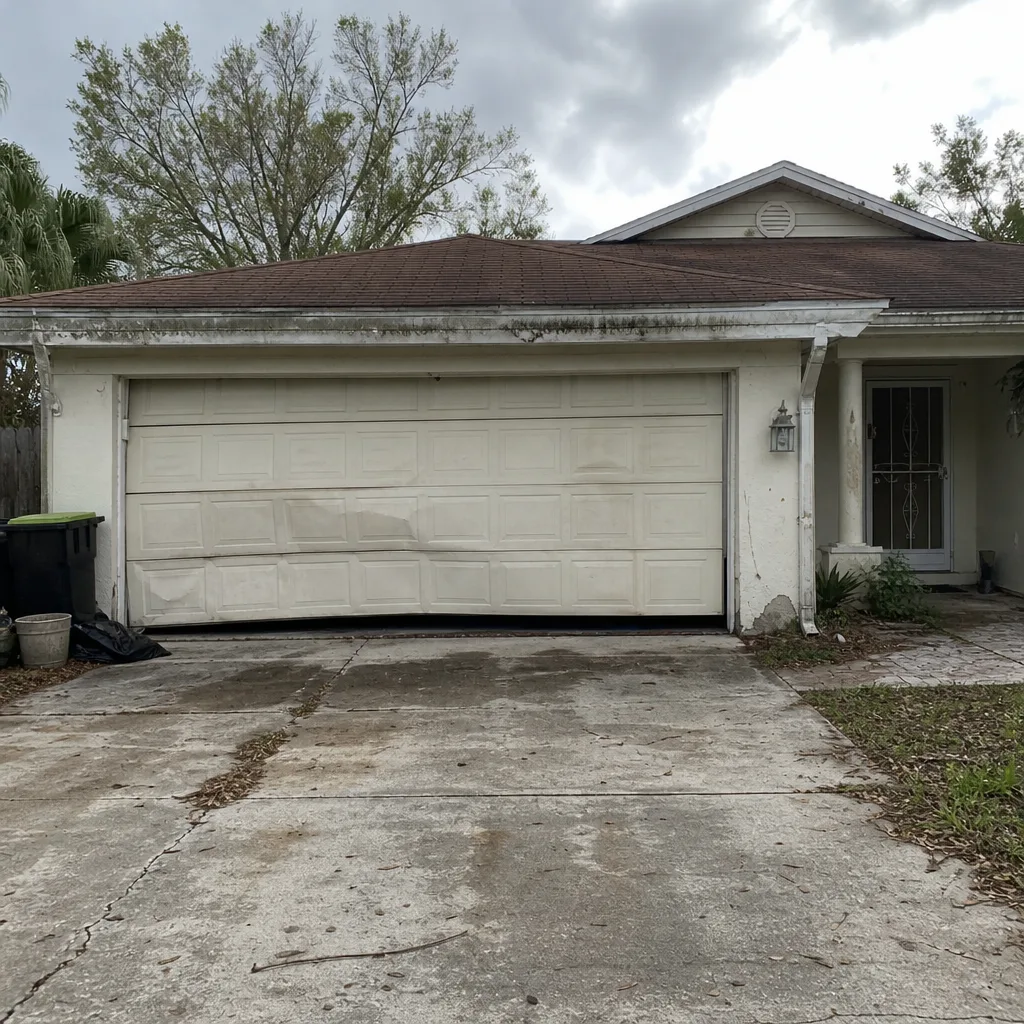 Before
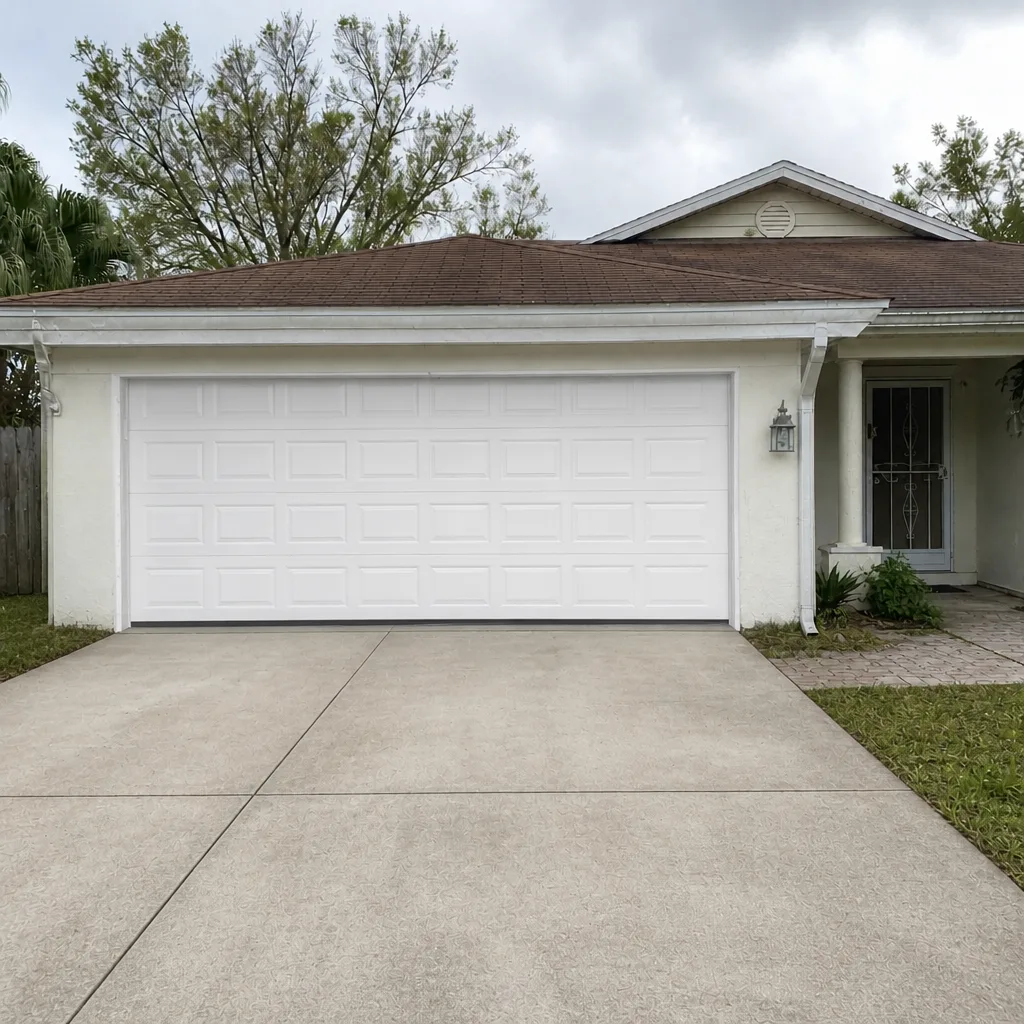 After
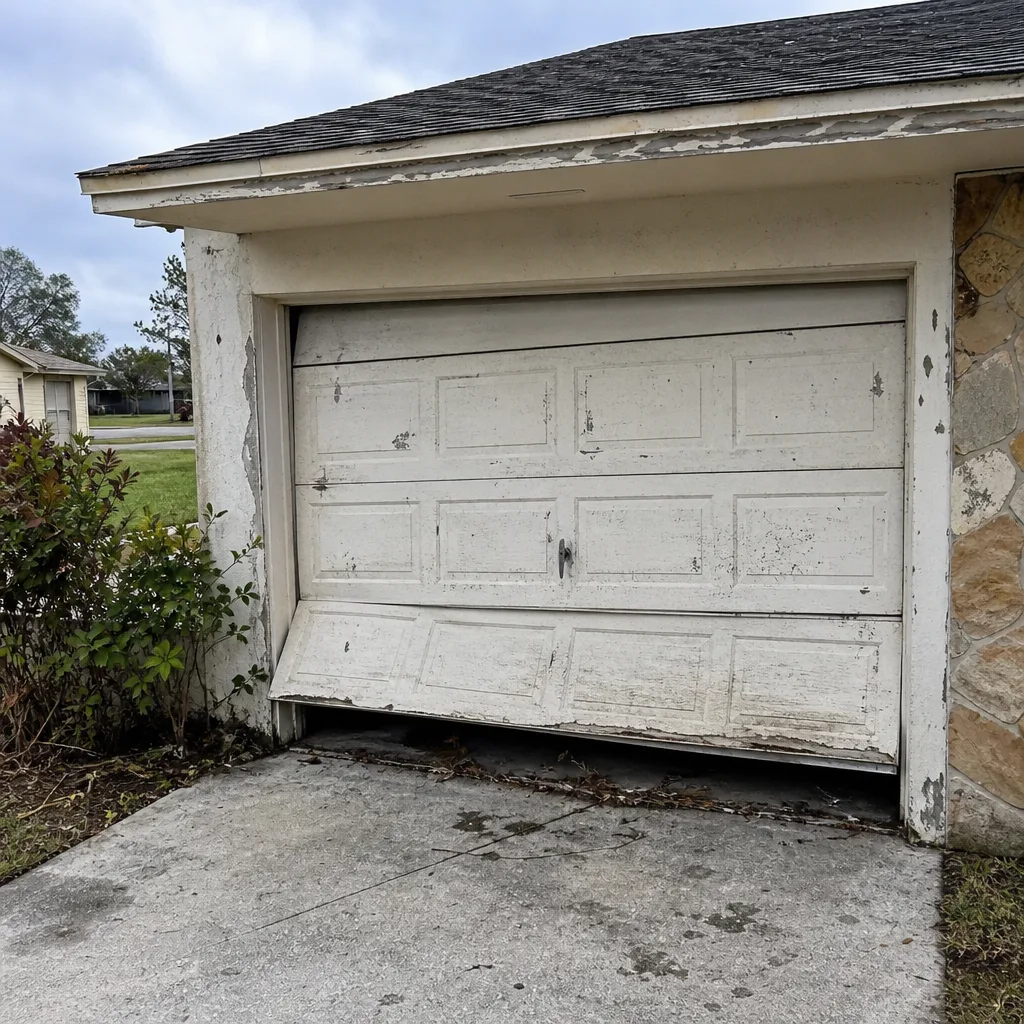 Before
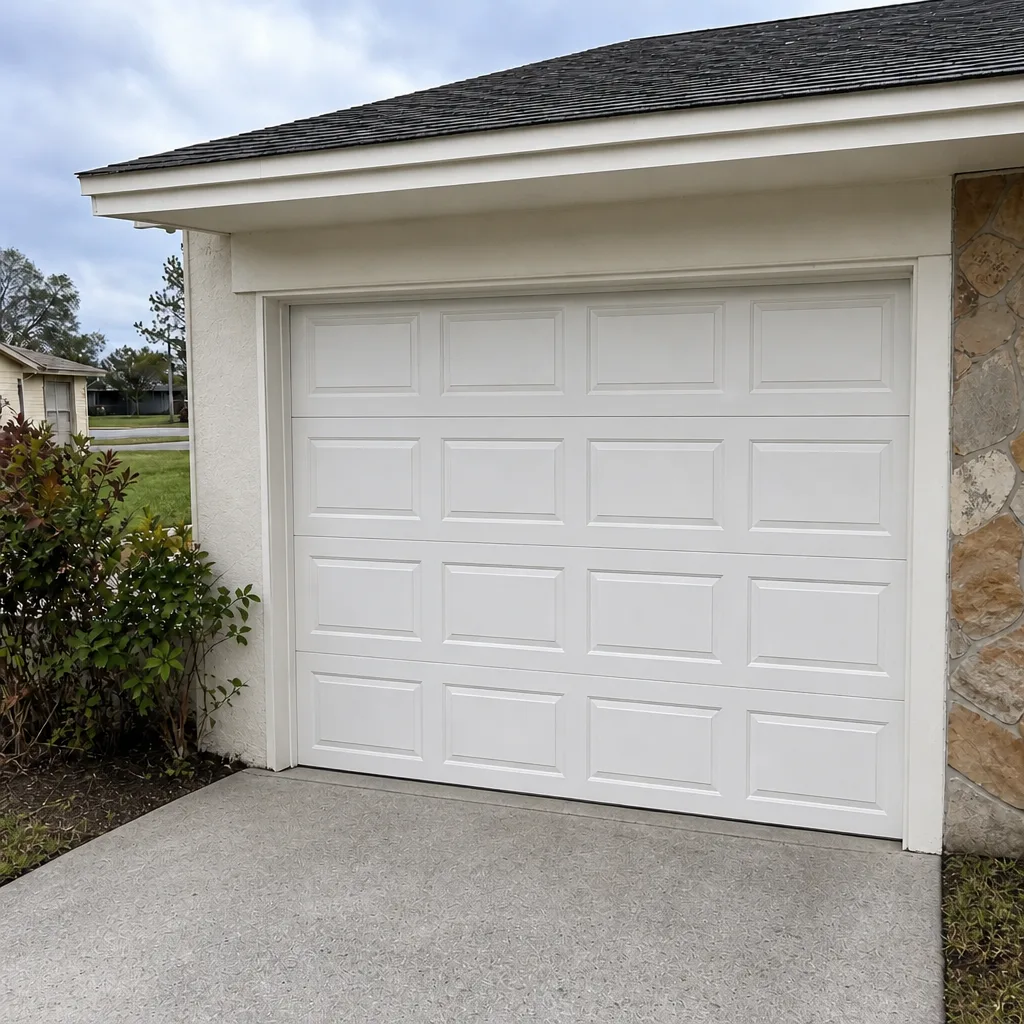 After
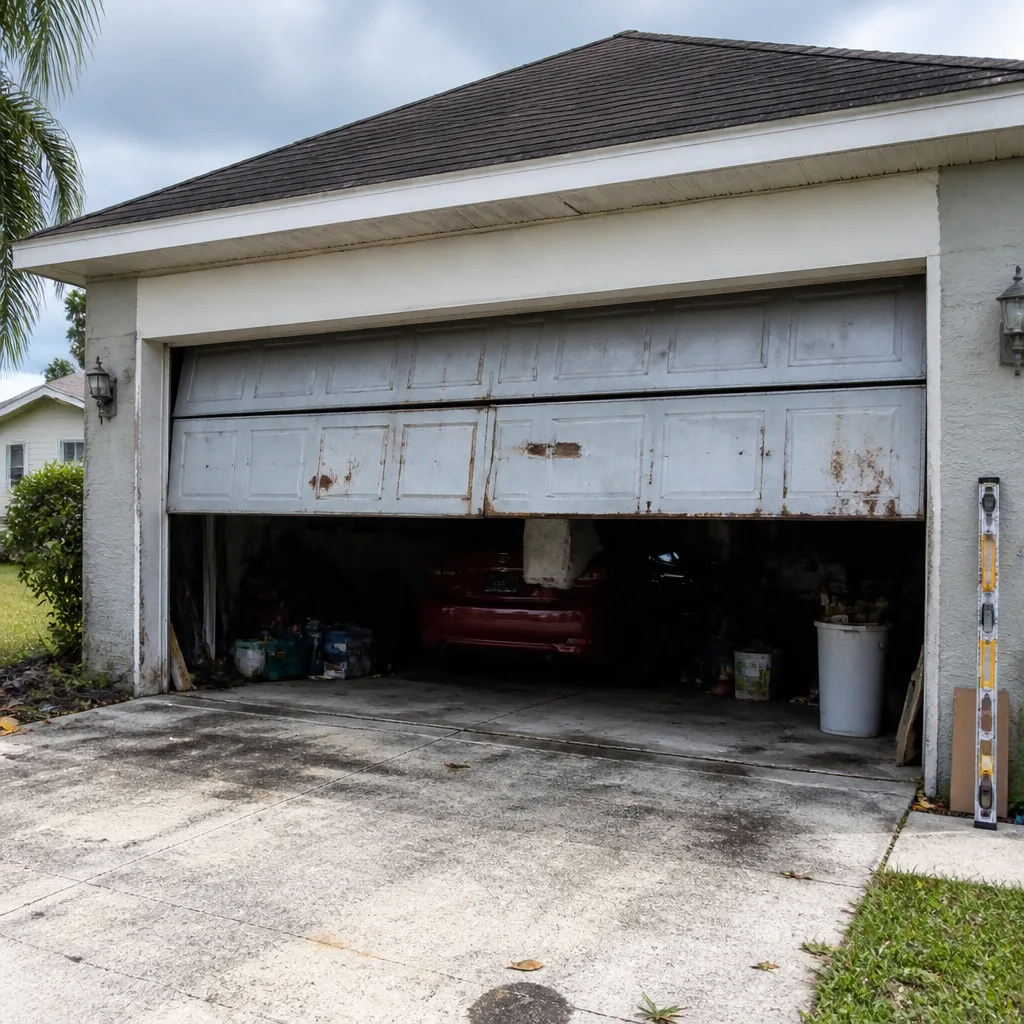 Before
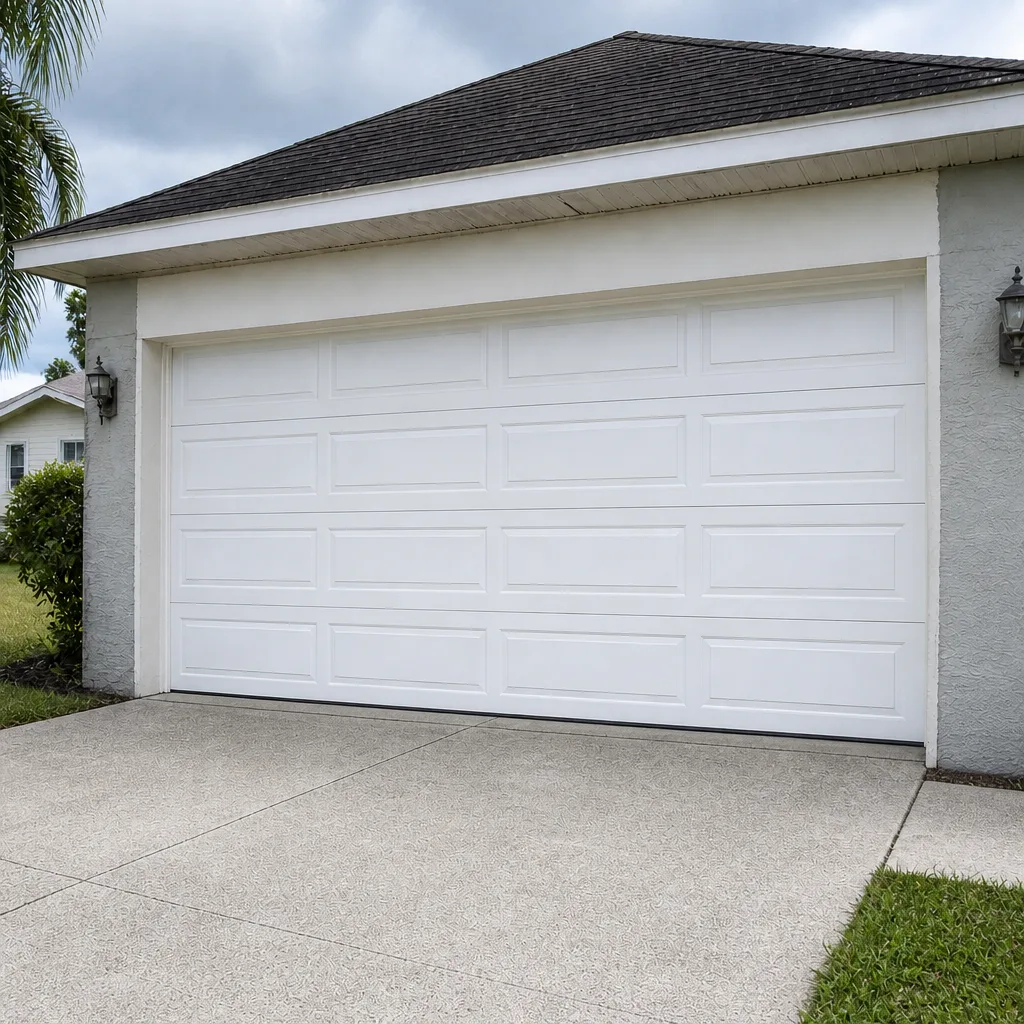 After
When to Call a Professional
Some jobs are fine for the homeowner. Lubrication, wiping down panels, testing the safety reverse, checking the weatherstripping – all good to handle yourself. But there are clear situations where a specialist should take over. Call us if a spring snaps or a cable frays, if the door comes off its tracks, if it won’t open or close at all, if it reverses unexpectedly, or if the opener is making grinding noises. Get help if the door is sagging, if you hear a loud bang from the spring area, or if you’re about to replace the door and need guidance on wind-load ratings and materials. Garage Door Repair North Fort Myers offers free estimates in North Fort Myers – call (877) 317-7510 and we’ll take a look before the problem gets worse.
Frequently Asked Questions
Springs here typically need replacement sooner than the national manufacturer estimates because humidity and salt air accelerate corrosion. The cycle rating assumes dry, ideal conditions, and those don’t exist in this climate. We recommend an annual inspection, and a spring that shows rust or starts making noise should be looked at sooner.
In most cases, yes. Residential garage doors in North Fort Myers generally need to meet Florida Building Code wind-load requirements, and the rating depends on your home’s construction and exposure. Check with the Lee County building department or a licensed professional before you buy. Call (877) 317-7510 for a free estimate on a compliant replacement.
Single spring replacement typically runs $180 to $340, and a matched pair usually gets replaced together at roughly twice that, so $360 to $680. The written estimate sets the final price. Call (877) 317-7510 for an exact quote – estimates are free.
Yes, for repair and emergency situations. If your door won’t open or close and you can’t wait, we offer emergency service at (877) 317-7510 and can often get there the same day. Full door or opener installation is scheduled after a measure and written quote, since those need the right product on order.
We work on the brand already in your garage, which is usually one of the major names like LiftMaster, Chamberlain, Genie, Clopay, Amarr, Wayne Dalton, Craftsman, or Raynor. Our technicians have up to 9 years of experience across these systems, so there’s no need to switch brands to get the door fixed.
The written estimate is the price. We quote the job after we’ve seen the door and agreed on the scope, and that figure is what you pay when the work is done – no surprise add-ons after the fact. Call (877) 317-7510 and we’ll walk you through it.
The Bottom Line
North Fort Myers is hard on garage doors, but a garage door doesn’t have to be a constant problem. The keys are the same ones this whole guide points to: choose materials built for humid, salty air, make sure your door meets Florida wind-load requirements, match the opener to the door, and keep up with lubrication and annual inspections on a schedule built for this climate instead of the national one. When something breaks – especially a spring or a cable – hand it to a trained technician and don’t risk a DIY repair. With the right setup and routine care, a door here lasts far longer than the national averages would suggest. If you want a hand getting there, call Garage Door Repair North Fort Myers at (877) 317-7510 for a free estimate.
Written by the team at Garage Door Repair North Fort Myers.