Last updated November 22, 2026
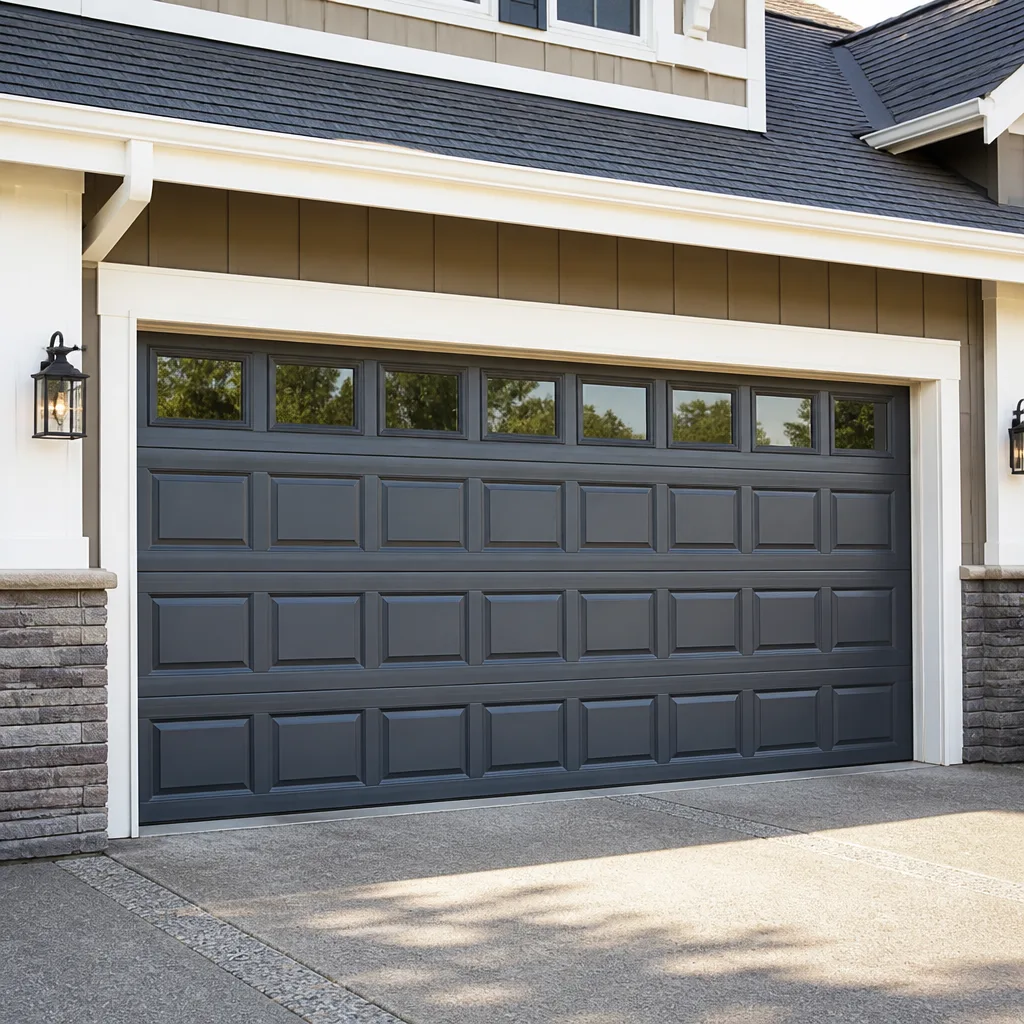 Raised-panel steel
 Carriage house
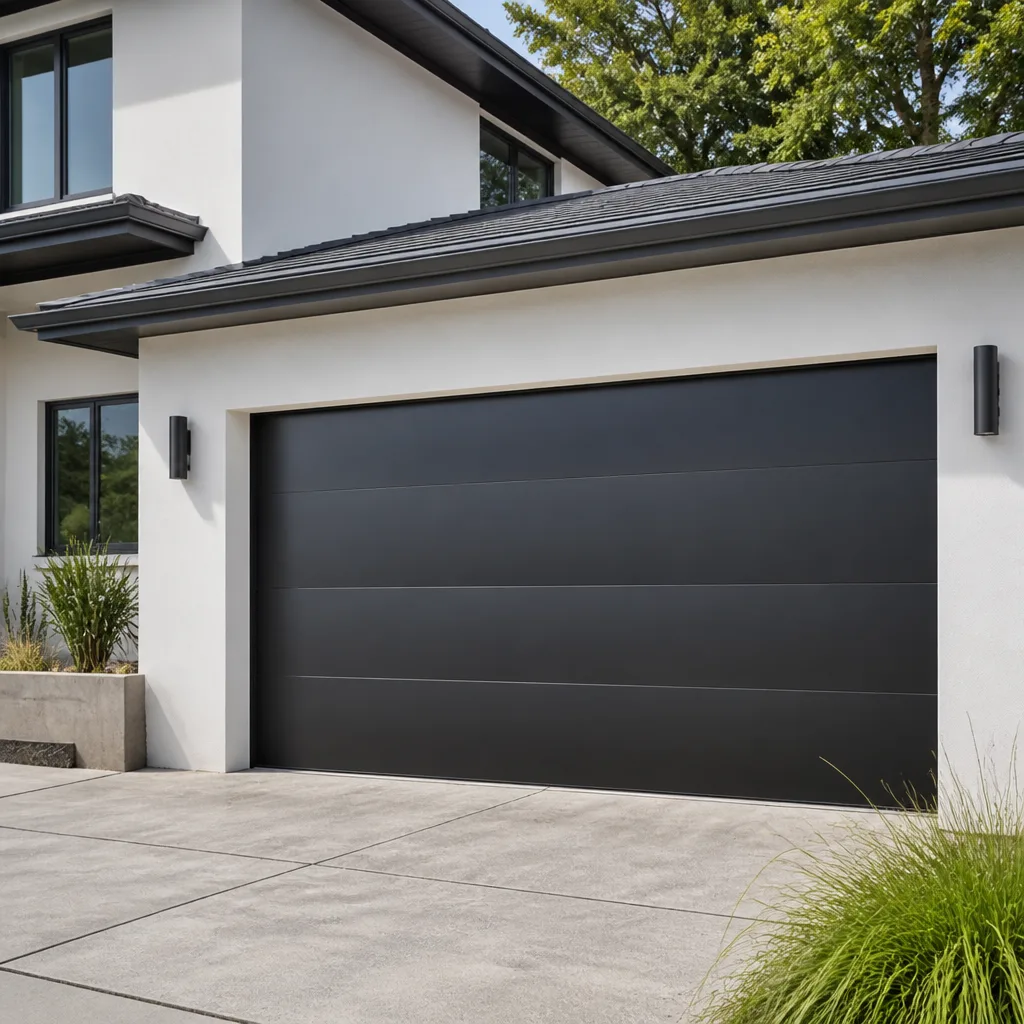 Modern flush
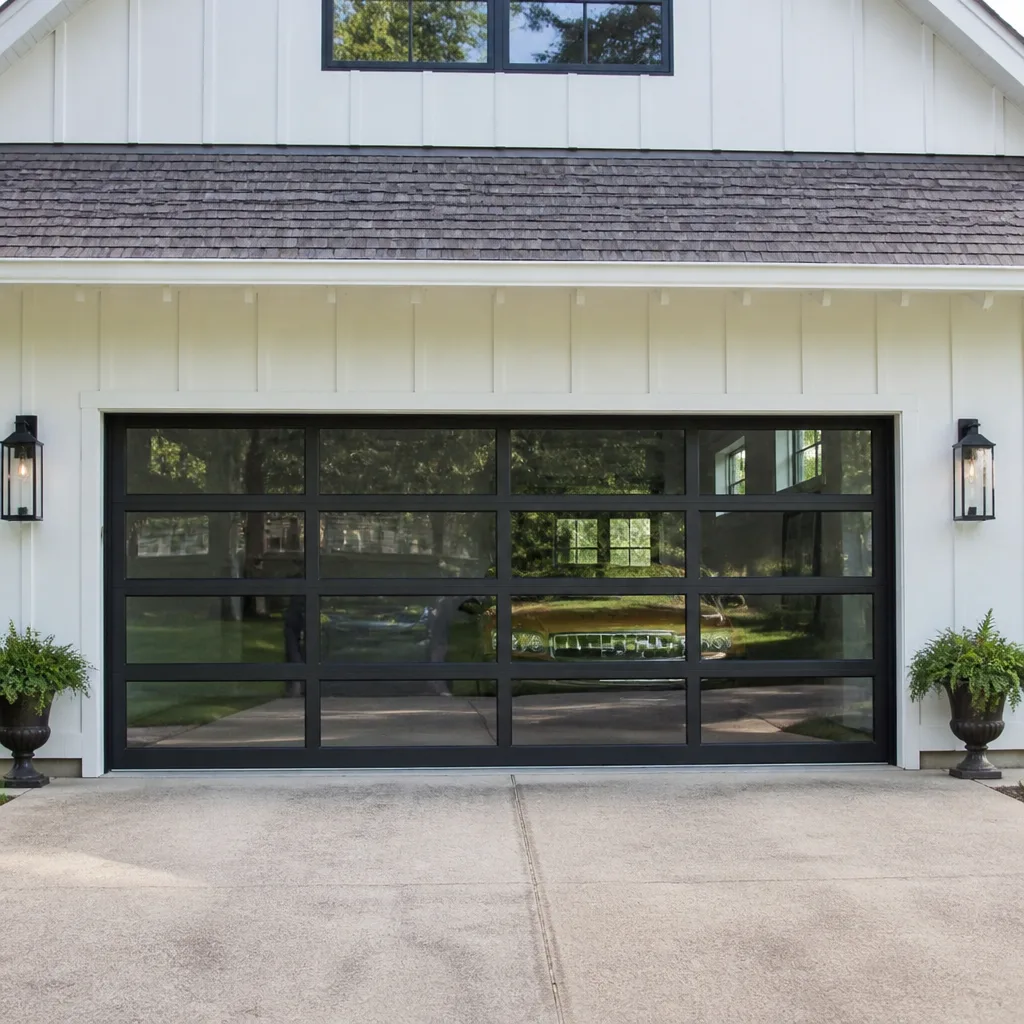 Full-view glass
 LiftMaster openers
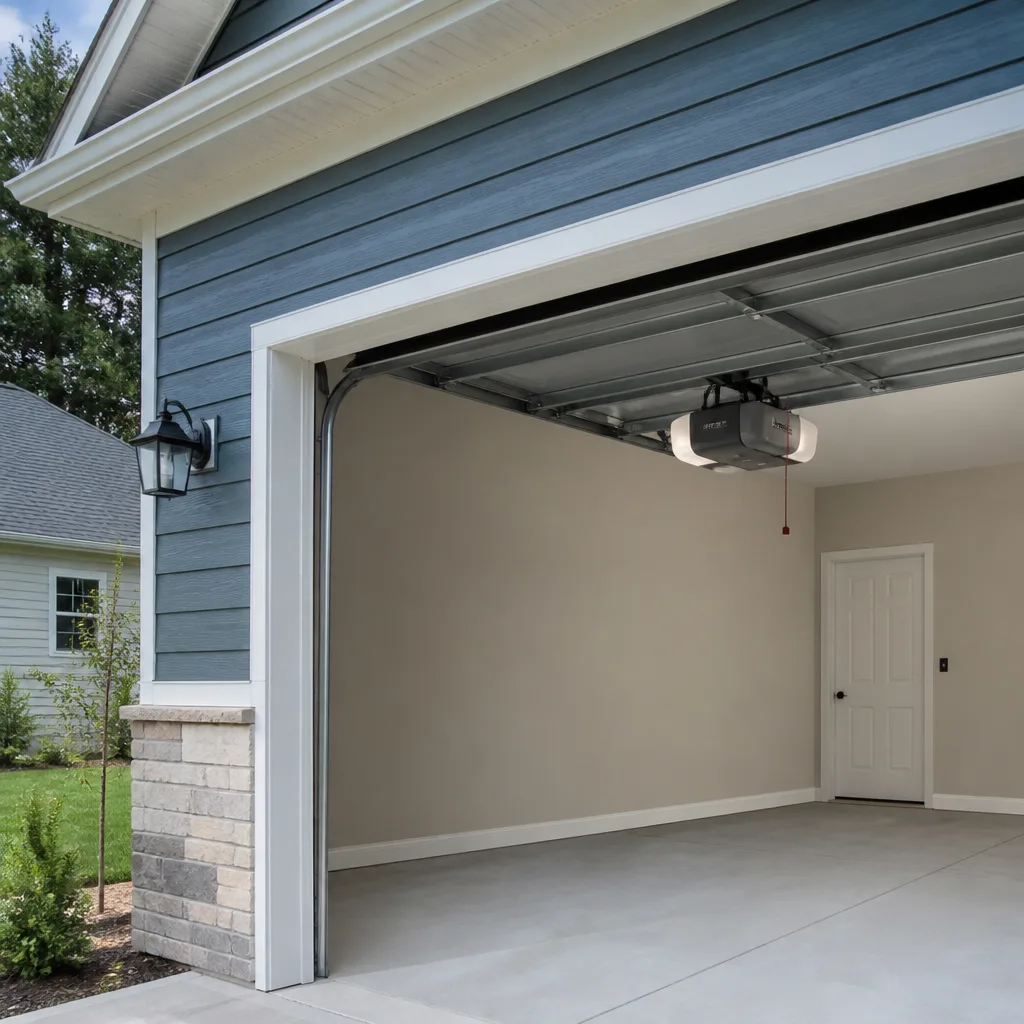 Chamberlain openers
Full 25-point door and opener safety check with every visit - springs, cables, rollers, tracks, and your LiftMaster or Chamberlain opener included
You get a price before we start. It does not change when the pro arrives.
Get your free estimateDIY vs Professional Garage Door: The North Fort Myers Homeowner’s Decision Guide
Most DIY debate about garage doors focuses on the obvious risk: torsion springs under extreme tension can hurt you badly if a winding bar slips. That risk is real, and we’ll cover it. But it’s not the whole story in North Fort Myers. Florida adds a legal layer that most online how-to guides skip entirely. Certain garage door work here requires a licensed contractor and a permit, and the door has to meet wind-load requirements tied to your home’s protection envelope. Do it yourself with the wrong parts and no inspection, and the problem may not show up until you sell the house or file a claim after a storm. This guide draws the line precisely: what’s legally safe for a handy homeowner to take on at home, what isn’t, and where a specialist earns their keep. Our technicians have up to 9 years of experience across all the major brands, including LiftMaster, Chamberlain, Genie and Raynor.
Quick Answer
In Florida, you can legally replace your own garage door springs, rollers, weather seals and sensors as a homeowner working on your own property, and a careful DIYer with the right tools can handle minor adjustments. You cannot legally install or replace a full garage door assembly or its wind-load reinforcement without the permit and inspections your local building department requires, and that work should go to a licensed contractor. The dividing line is simple: moving parts and hardware are homeowner territory; structural and wind-rated systems are permit-and-professional territory.
Styles & brands we work with
- Raised-panel steel
- Carriage house
- Modern flush
- Full-view glass
- LiftMaster openers
- Chamberlain openers
Table of Contents
- What Florida Law Allows Homeowners to Do Themselves
- The Three North Fort Myers Jobs Where DIY Risk Climbs Fastest
- How DIY Garage Door Work Affects Your Insurance
- A Realistic Skill and Tool Check Before You Start
- The Hidden Cost of a DIY Mistake in North Fort Myers
- What a Wind Mitigation Inspection Looks For
- What a Professional Actually Brings to the Job
- Which Tasks Belong to You and Which to a Pro
What Florida Law Allows Homeowners to Do Themselves
Florida’s construction rules treat the owner-occupied single-family home differently from commercial property. If you own the home and live in it, you’re generally allowed to perform maintenance and minor repair work on your own property without holding a contractor license. That covers replacing rollers, swapping a bottom seal, resetting photo-eye sensors, lubricating hinges and tracks, and replacing a worn torsion spring or pair of springs if you have the training and the right winding bars. No permit is typically issued for those component swaps because you aren’t altering the structure or its rated assembly.
What changes the picture is scope. Replacing the entire door, changing the door’s model or weight class, adding or modifying wind-load reinforcement, altering the track geometry, or installing a new opener with new wiring all fall into territory where a permit and a licensed contractor come into play. The exact permit triggers live with your local building department, not with a general internet rule, and they can shift between jurisdictions. Lee County homeowners should confirm the current requirement directly with the county or city building office before scheduling work, because the answer can depend on the specific door and the specific assembly.
A practical way to frame it:
- Homeowner-safe: one-for-one swaps of non-structural hardware, cleaning and lubrication, sensor alignment, remote programming, and weather seal replacement.
- Gray zone: replacing a single spring pair on an older door where the door’s rated assembly and hardware are unknown or worn.
- Professional-and-permit territory: full door replacement, new installation, wind-load reinforcement changes, new opener wiring, and any track or structural change.
The reason the gray zone exists is that a torsion spring’s job isn’t just to lift the door. It’s matched to the door’s weight. Put the wrong spring on and the opener strains, the cables go slack, and the door can come down hard. For a matched pair, expect the cost of one spring to roughly double, since both sides should be replaced together. We cover the specifics on our garage door spring repair page.
The Three North Fort Myers Jobs Where DIY Risk Climbs Fastest
Not every repair carries the same risk in North Fort Myers. Three jobs deserve special caution here because of how the local housing stock and weather interact with door systems. North Fort Myers has a mix of older block homes and newer construction, and older doors often carry hardware that’s already near the end of its life. The summer storm season is a real force on exterior systems, and a door that wasn’t installed and braced to spec is a weak point. Here’s where the risk concentrates.
- Torsion spring work. The spring above the door stores enough energy to move a door many times your weight. The winding process requires specific bars, a firm stance and a clear understanding of how the tension releases. A slip can cause serious injury in a fraction of a second. This is the single most dangerous task on any garage door, and it’s not a job to learn from a video.
- Cable replacement. The lift cables run from the bottom bracket to the drum and spring assembly. They’re under tension too, and a cable that lets go under load can whip. A damaged bottom bracket or a frayed cable is also a sign the door’s balance is off, which means replacing the cable alone may not solve the underlying problem.
- Wind brace installation. Adding or modifying wind-load reinforcement changes the door’s rated assembly. This is structural work tied to permits and inspections, and doing it with a generic brace from a home center can leave the door out of compliance with what your home’s protection requires.
Notice the pattern: the danger isn’t just to your body, though that comes first. It’s also to the legal and structural record of your home. Spring and cable work can’t be safely DIY’d if you don’t have the right tools and training, and wind bracing shouldn’t be DIY’d at all. If you’re unsure which category your job lands in, a quick call settles it. Emergency garage door service is part of what we do, so when the door won’t move, you’re not stuck waiting.
How DIY Garage Door Work Affects Your Insurance
This is the part that surprises North Fort Myers homeowners most. Your homeowner’s insurance and your wind mitigation inspection are connected to your garage door in ways that a spring replacement doesn’t touch but a door installation does. Wind-rated door systems are documented components. The home’s mitigation profile records whether the garage door meets the standard for the opening it protects. When a door is replaced or its bracing is modified without permits and inspections, that record can become inconsistent with what’s actually installed.
A wind mitigation inspection is where this inconsistency surfaces. An inspector documents the door’s rating, its labeling, and its installation. A door installed without the required permit may not carry the documentation an inspector needs, and an unreported modification can create questions when a claim is filed. This doesn’t mean every DIY repair voids coverage; it means the structural and wind-rated work carries documentation requirements that a homeowner working alone can’t satisfy. The safe rule is: if the job needs a permit, let a licensed contractor do it and let the inspection happen.
None of this is a reason to panic. It’s a reason to plan. If you’re repairing a sensor or swapping a roller, your insurance doesn’t care. If you’re changing the door itself, the paper trail matters. If you’re reporting a claim after a storm, having the door’s installation documented correctly is the difference between a smooth process and a frustrating one. We can work with your insurer to get the documentation right.
A Realistic Skill and Tool Check Before You Start
Be honest with yourself about this list, because overconfidence is how most DIY garage door injuries and mistakes start. A prepared homeowner with the right tools and some mechanical confidence can safely handle a defined set of jobs. A homeowner with a step ladder and a screwdriver, working alone, shouldn’t touch the spring. Use this checklist before you buy a single part.
- Do you have the specific tools? Winding bars for torsion springs, a sturdy step ladder rated for your weight, proper wrenches, and C-clamps to lock the door in place are the minimum. A power drill and a socket set don’t substitute.
- Do you know your door’s weight and spring size? Springs are rated by wire gauge, inside diameter and length. Guessing is how doors get imbalanced. If you don’t know, that’s a sign to stop.
- Can you work without rushing? Spring and cable work done in a hurry is when mistakes happen. If you’re squeezing it in before dark, don’t start.
- Do you have a second person? Heavy panel handling and door balancing need two sets of hands. A door panel that slips can damage the track or land on you.
- Can you identify your opener brand and model? Programming a remote or resetting limits on a LiftMaster or Chamberlain opener is often a five-minute job with the manual. Working blind on a Genie or Raynor system is where people make things worse.
If you answer yes to all five for a hardware-level job, you’re in reasonable shape. If you answer no to any of them for spring or cable work, that’s your signal to stop and book a specialist. When your door’s not moving, our garage door repair service is the fastest route to a working door, and we’ll tell you upfront what the job involves.
The Hidden Cost of a DIY Mistake in North Fort Myers
The sticker price of a DIY repair is the part you see. The cost of getting it wrong is the part you don’t. In the North Fort Myers market, three hidden costs show up again and again when a homeowner starts a job and can’t finish it. None of them are reasons to be afraid of basic maintenance. They’re reasons to be clear-eyed about which jobs are worth the gamble.
Parts availability and matching. Garage door hardware isn’t universal. Springs must match the door’s weight, and openers are brand-specific. A homeowner who buys the wrong spring or a remote that won’t pair with their Genie or Chamberlain unit has spent money on parts that won’t work, and the return trip can eat the savings. Sourcing the correct part the first time is a specialist’s regular workday, not a weekend project.
Re-permit requirements. If a door was installed or modified without the required permit, getting it corrected can mean pulling a permit after the fact, paying for an inspection, and sometimes redoing the work to meet the standard. That’s a cost that compounds the original repair, and it surfaces at the worst time, often during a sale or refinance.
Correction labor. When a DIY repair goes sideways, the professional has to undo the mistake before doing the correct job. That’s correction labor on top of the repair, and it can push a modest spring job into a larger bill. A door that’s been forced, mis-tensioned or re-tracked by hand often needs more work to put right than it would have needed if it had been left alone.
If you’ve already started and hit a wall, don’t force it. A call now is almost always cheaper than a call after another attempt. We quote the price and get your agreement before any work starts, so there are no surprises. And for a full door replacement, we recommend a free measure and a written price rather than a same-day promise, because that work is measured, ordered and scheduled.
What a Wind Mitigation Inspection Looks For
A wind mitigation inspection reviews the parts of your home that resist wind and documents their condition and rating. Your garage door is one of them because it’s a large opening and a common point of failure. The inspector looks for the door’s rating label, its reinforcement, and evidence that it was installed to the standard the home’s profile records. A door that’s been modified, replaced without a permit, or braced with generic hardware can create a mismatch between what’s on paper and what’s on the door.
Here’s how to think about it as a homeowner:
- Keep whatever paperwork came with your door and any permits or inspection records. That file is your proof.
- Don’t modify the door’s structure or bracing without the required permits. If it’s wind-rated, it’s rated as a complete assembly, not a collection of parts.
- If you buy a home in North Fort Myers, ask for the garage door documentation along with the rest of the inspection report.
- If a door replacement is needed, let the licensed contractor handle the permit and let the inspection happen. That’s the paper trail that protects you later.
The good news: a correctly installed door in North Fort Myers, documented and inspected, is one of the easier components to keep in good standing. Replace worn rollers and seals on schedule, keep the tracks clean, and watch for a door that no longer sits level. Small problems caught early stay small. Our Garage Door Repair North Fort Myers page covers the full scope of repair work if you need to book an inspection or a fix.
What a Professional Actually Brings to the Job
The value of a professional isn’t just speed. It’s the combination of the right tools, the right parts the first time, and the paperwork that keeps your home compliant. Our technicians have up to 9 years of experience, and we work on whatever brand is already in your garage, including LiftMaster, Chamberlain, Genie and Raynor, so you don’t need to swap brands to get a repair done. That matters most on spring and opener work, where matching components to the existing system is half the job.
Here’s what a specialized garage door provider covers on a full-service basis:
Emergency and repair work
- Doors that won’t open or close, off-track doors, and snapped cables.
- Dedicated spring repair as its own service, with the correct springs matched to your door’s weight.
- Opener diagnostics and repair, since we work across the leading opener brands and not just door panels.
Installation and replacement
- Full new-door installation with the permit and inspection handled correctly.
- Brand-educated guidance on what door suits your home’s opening and protection requirements.
- A free measure and written price, with the price agreed before any work starts.
One distinction worth stating: emergency service is a genuine offering, not a marketing line. When the door fails and you can’t secure the house, a specialist responds. That’s the same reason we offer dedicated spring repair. It’s the most mechanically critical component on your door, and it’s the one we want to get exactly right. Our garage door opener repair service covers the electronic side, and a free estimate means you can find out the real scope of a job before committing.
Which Tasks Belong to You and Which to a Pro
Here’s the decision in one place, task by task, for North Fort Myers homeowners. This is where the debate becomes practical: read down the list, find your job, and act on the answer.
- Lubricating hinges, rollers and springs (where accessible): DIY. Low risk, useful, keeps the door quiet.
- Cleaning and re-aligning photo-eye sensors: DIY. Most door problems that look mechanical are actually a dirty or misaligned sensor.
- Replacing weather seals: DIY. A clean swap with a standard part.
- Programming a remote or keypad: DIY if you have the manual for your opener brand. A pro can do it in minutes if you’re stuck.
- Replacing a worn roller or hinge: DIY for a careful homeowner. Keep the door closed and clamp the bottom section before you start.
- Replacing torsion springs or cables: Professional. The stored energy makes this genuinely dangerous, and the risk isn’t worth it.
- Fixing a door that’s off its track: Professional. Forcing it back can damage the panels and track beyond repair.
- Replacing or rewiring an opener: Professional. Electrical work and opener installation are permit territory in many cases.
- Adding or changing wind-load reinforcement: Professional and permit. Structural and rated components belong on the paperwork.
- Installing a new door or replacing the assembly: Professional and permit. Get the free measure and written price first.
Two practical notes. First, if your door is noisy or jerky but still works, try lubrication and a sensor check before calling it broken. Many service calls are for problems a homeowner could have cleared. Second, if the door is old and the spring has snapped, the repair and a replacement decision are worth discussing together. Sometimes the right move is a spring and cable service; sometimes it’s a new door. We’ll tell you which without pushing a swap.
Common Mistakes to Avoid
- Buying a spring without knowing the door’s weight. Two sentences is all it takes to order the wrong spring, and the wrong spring puts stress on the opener and the door. Have a professional identify the size.
- Assuming a homeowner can do everything on their own property. Florida is generous to owner-occupants on maintenance, but structural and wind-rated work still needs permits and licensed contractors. Confirm with your local building department before you assume.
- Modifying wind bracing with generic hardware. A hardware store brace isn’t a wind-load solution for your specific door. This is the mistake most likely to cause trouble at inspection time.
- Replacing one spring and leaving the other. Paired springs wear together. Replacing one can leave the door imbalanced, and the other spring is likely near its limit too.
- Forcing a door that’s off track. Cranking a misaligned door back into place can bend the track, break rollers and crack panels. Stop and call.
- Finishing a partial job and calling it done. A door that’s not balanced or properly seated is a safety problem every time it cycles, and it can look fine to the eye.
- Ignoring the paperwork. In North Fort Myers, keeping the door’s permit and inspection records is part of protecting your home. A missing file is a headache at sale time.
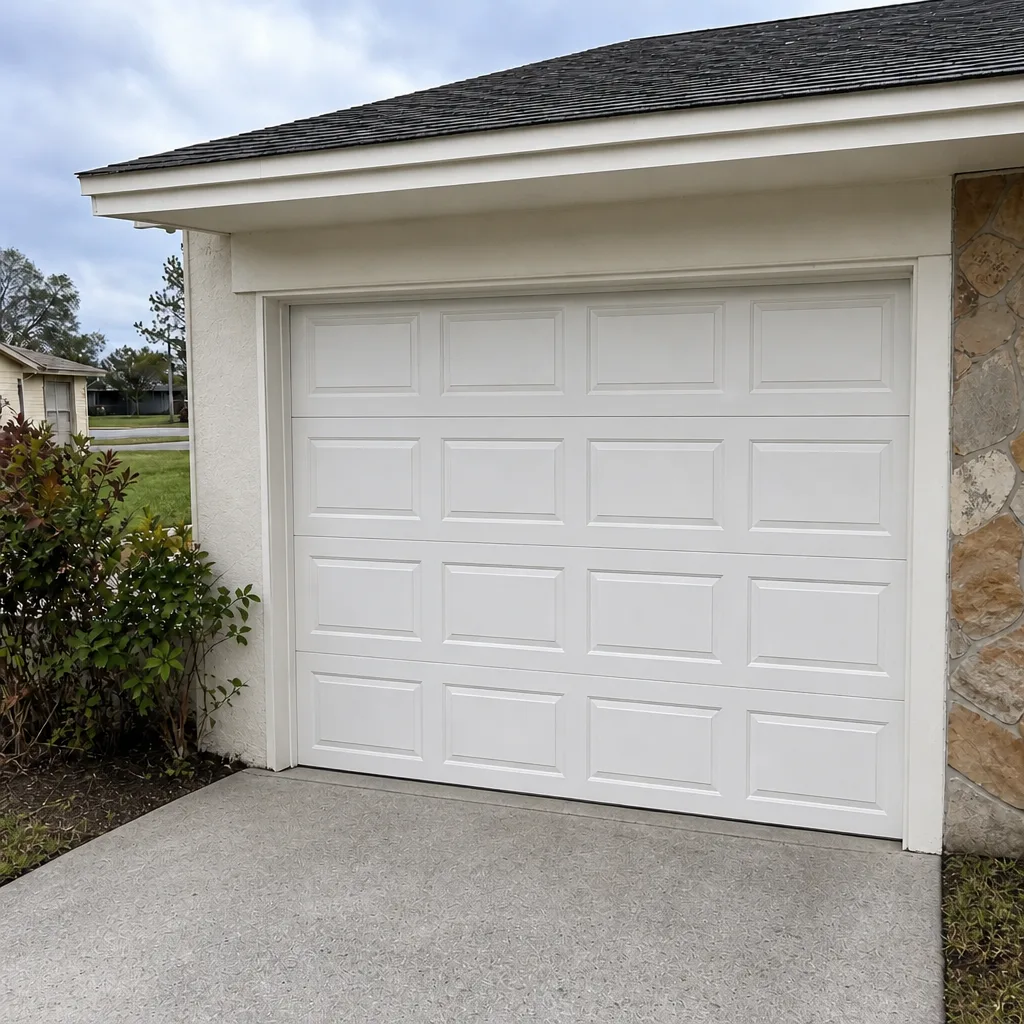
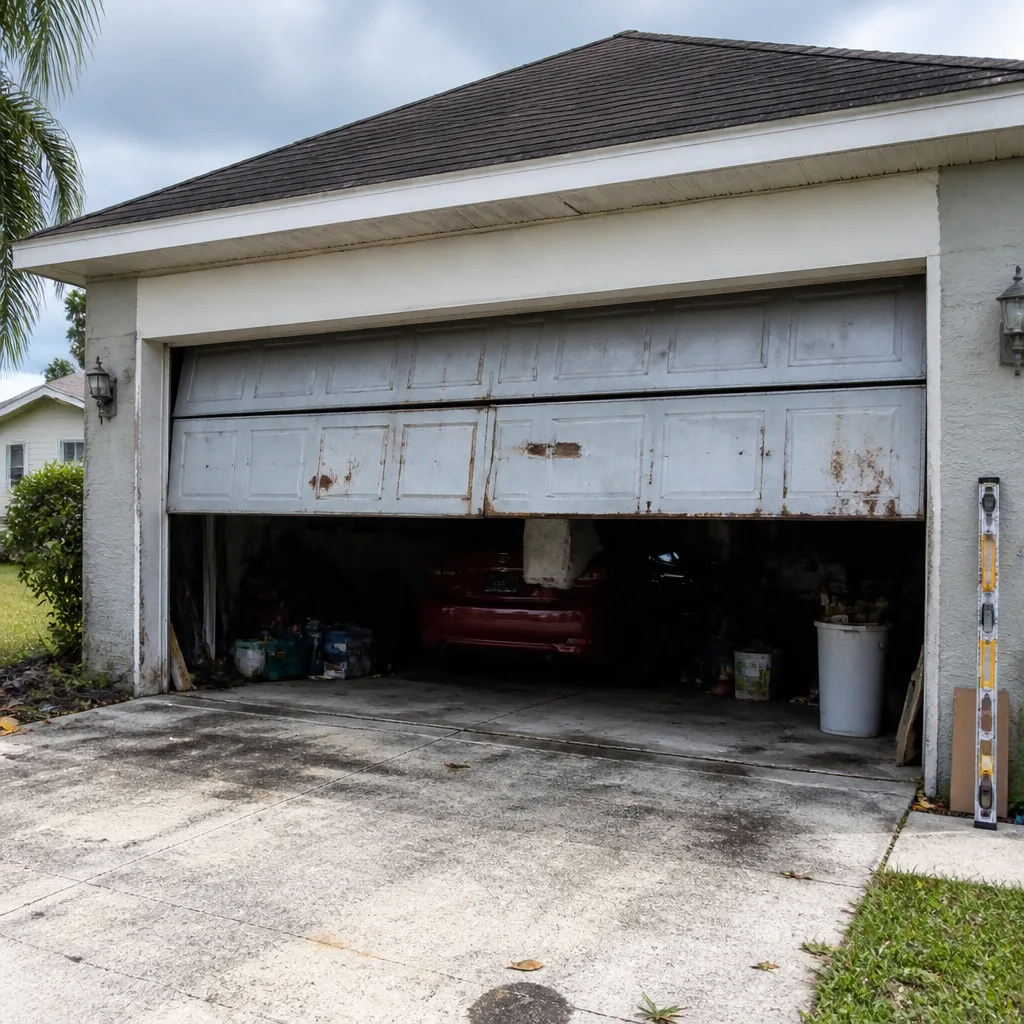
See the difference
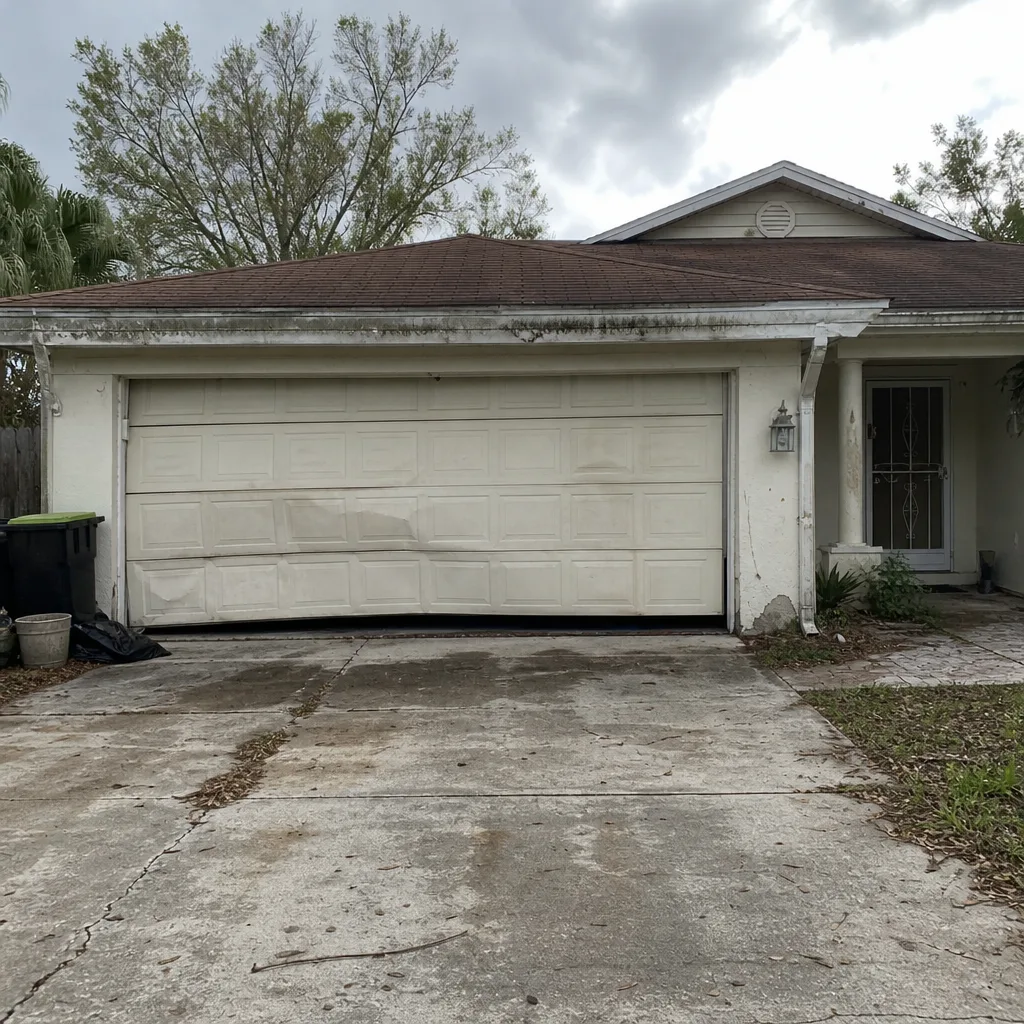 Before
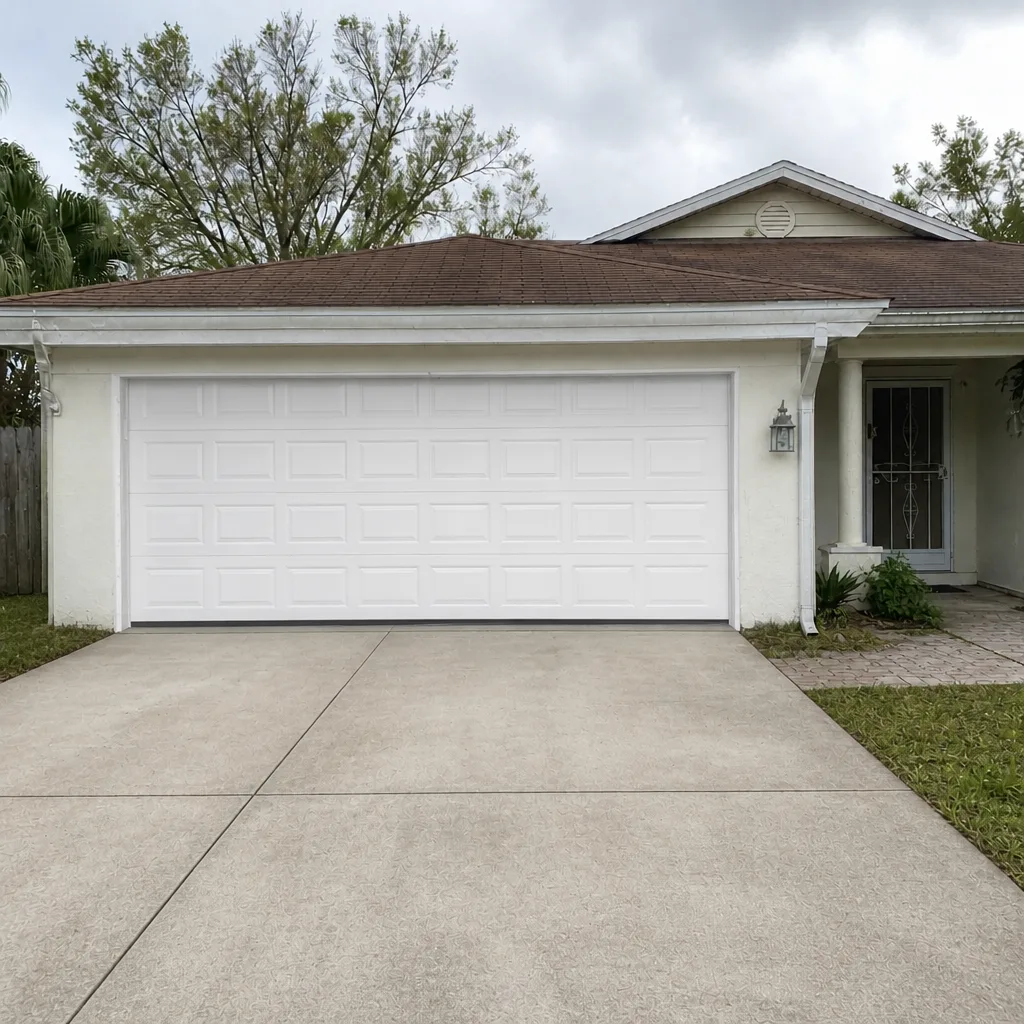 After
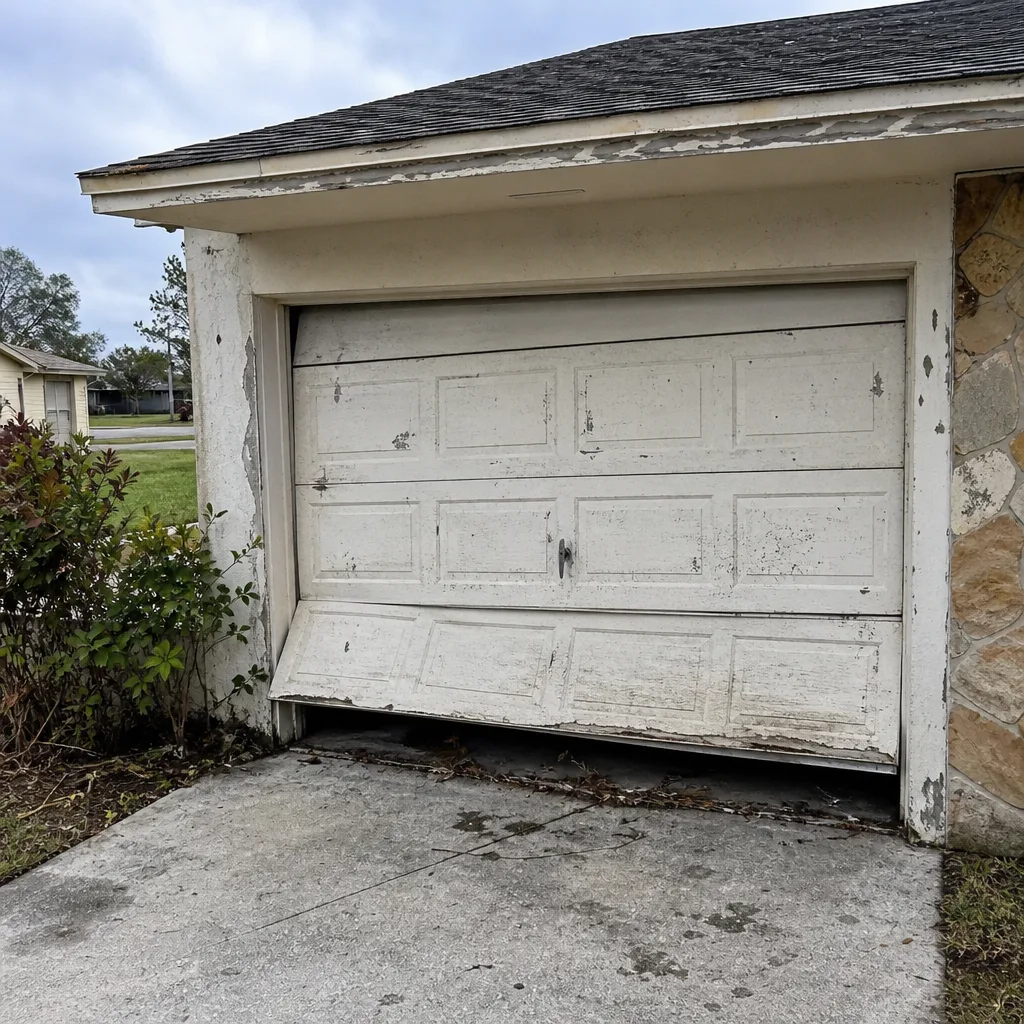 Before
 After
 Before
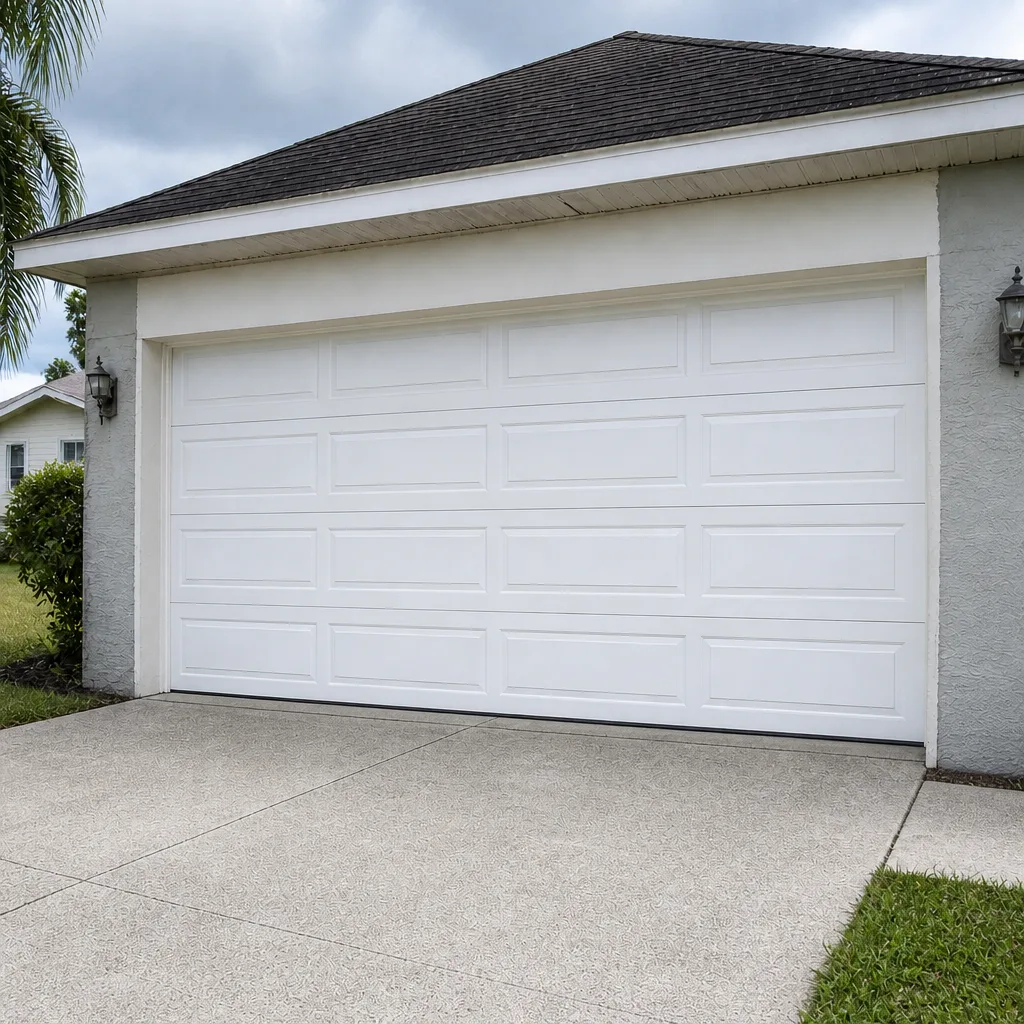 After
When to Call a Professional
Call a professional when the job involves a broken torsion spring, a snapped or frayed cable, a door that’s come off its track, or any work that alters the door’s structure or wind-rated assembly. Call when you don’t know the door’s weight or spring size. Call when you’ve started a repair and realized you’re in over your head, because stopping early is far cheaper than forcing it. And call when the door won’t open or close and you need access and security now. Garage Door Repair North Fort Myers offers free estimates in North Fort Myers; call (877) 317-7510. We quote the price and get your agreement before any work begins, and emergency service is available when the door won’t move.
Frequently Asked Questions
Yes, for a homeowner working on your own primary residence, Florida generally allows you to perform that repair yourself without a contractor license. The legal question is separate from the safety question, and spring work is the most dangerous job on any residential door. If you don’t have the proper tools and the training, have a specialist do it. Call (877) 317-7510 for a free estimate.
In most cases, yes, a full door replacement and any change to wind-load reinforcement require a permit and inspections from your local building department. Permit rules can vary, so confirm the current requirement with the county or city building office before scheduling the work. A licensed contractor handles the permit as part of the installation.
Simple maintenance like replacing a seal or a roller doesn’t affect your insurance, but structural or wind-rated work done without permits and inspections can create documentation gaps. A wind mitigation inspection relies on the door’s rating labels and paperwork. If the job needs a permit, let a licensed contractor do it and let the inspection happen. Call (877) 317-7510 if you want a professional to look at the door first.
For repair and emergency issues like a door that won’t open, a snapped spring or a door off its track, same-day service is often available. Installation and replacement are different: those jobs are measured, ordered and scheduled. When the door won’t move, call (877) 317-7510 and we’ll get you on the schedule.
Repair costs depend on the specific problem, whether it’s a spring, a cable, the opener or the track, and the prices vary by job. We give a free estimate before any work starts, and the written quote is the price. For a matched pair of springs, expect roughly double the cost of a single spring. Call (877) 317-7510 for your exact quote.
You need the correct winding bars for the spring’s size, a ladder rated for your weight, wrenches sized for the hardware, and C-clamps to secure the door. A power drill or socket set won’t substitute, and guessing at the spring size is how doors get imbalanced. If you’re missing any of the specific tools, stop and book a professional. Estimates are free at (877) 317-7510.
The Bottom Line
In North Fort Myers, the DIY-versus-professional question has two answers, and both matter. For hardware, seals, sensors and lubrication, a prepared homeowner can save time and money with minimal risk. For torsion springs, cables, wind bracing and full door installation, the risk isn’t just injury. It’s permits, inspection records and insurance documentation that a lone homeowner can’t produce. The smart move is to draw the line clearly before you pick up a tool: handle what’s safe, and let a specialist handle the rest. Our technicians have up to 9 years of experience, we work on whatever brand is already in your garage, and we’re ready when the door won’t move.
Get a Free Estimate Today
If your garage door is stuck, noisy, off track or due for a replacement, call us at (877) 317-7510 for a free estimate. We’ll tell you what the job involves, quote the price, and get your agreement before any work starts. Whether you need emergency garage door service, spring repair, opener repair or a new door installation, we’re ready to help North Fort Myers homeowners get the door working again.
Written by the team at Garage Door Repair North Fort Myers.