Last updated November 22, 2026
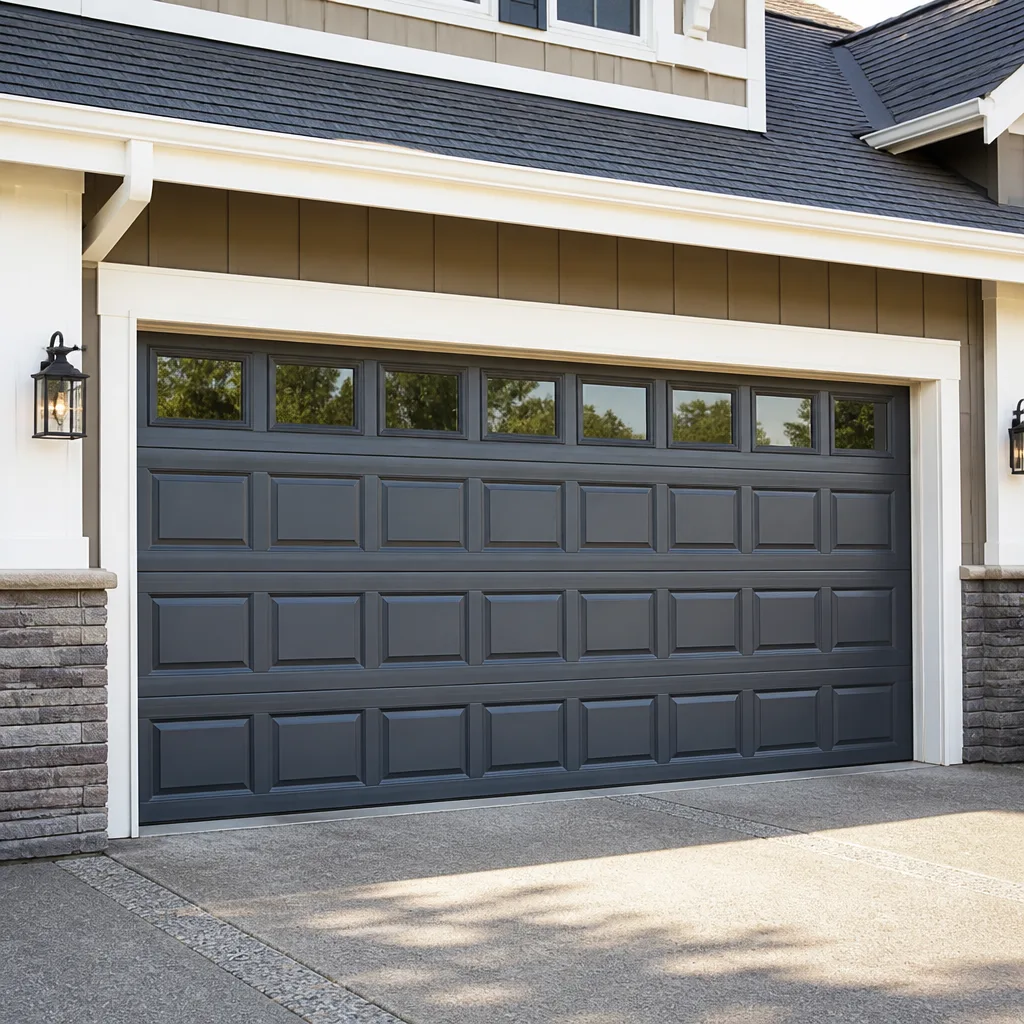 Raised-panel steel
 Carriage house
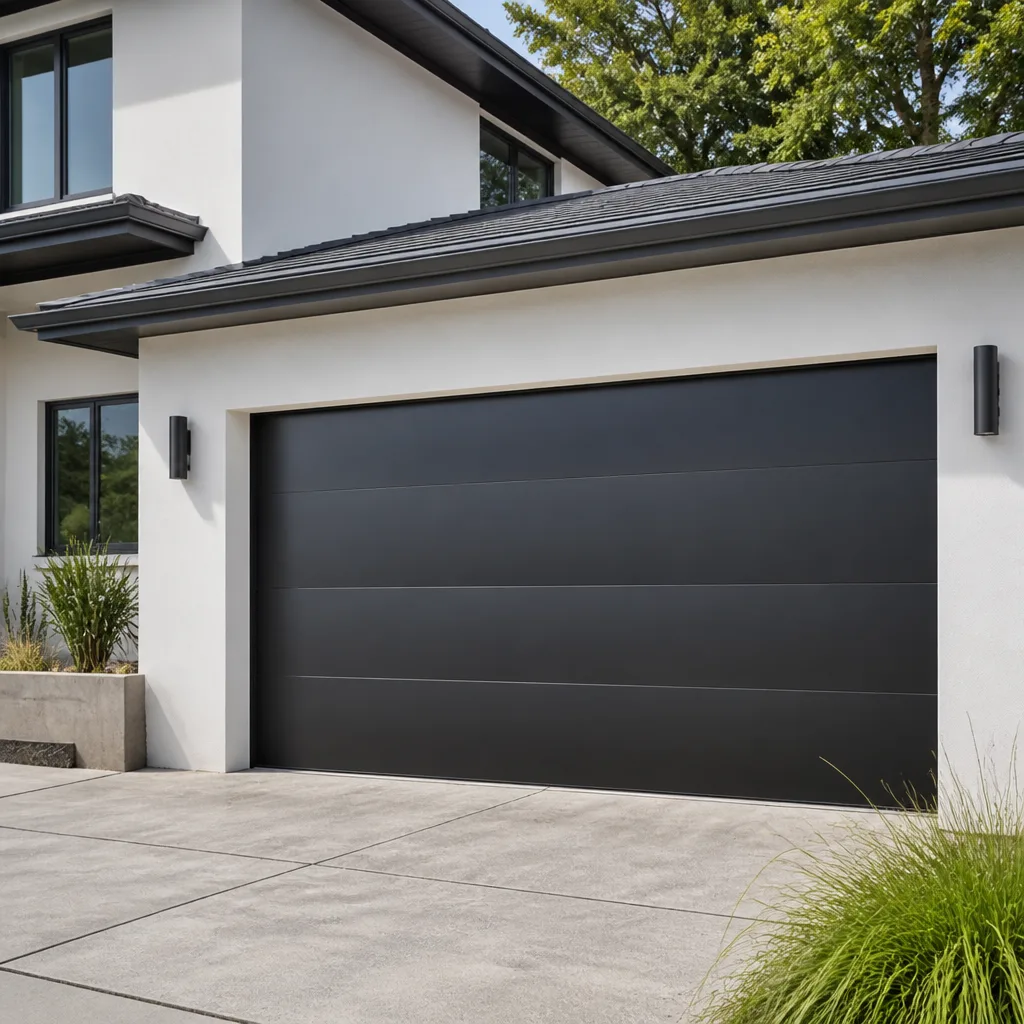 Modern flush
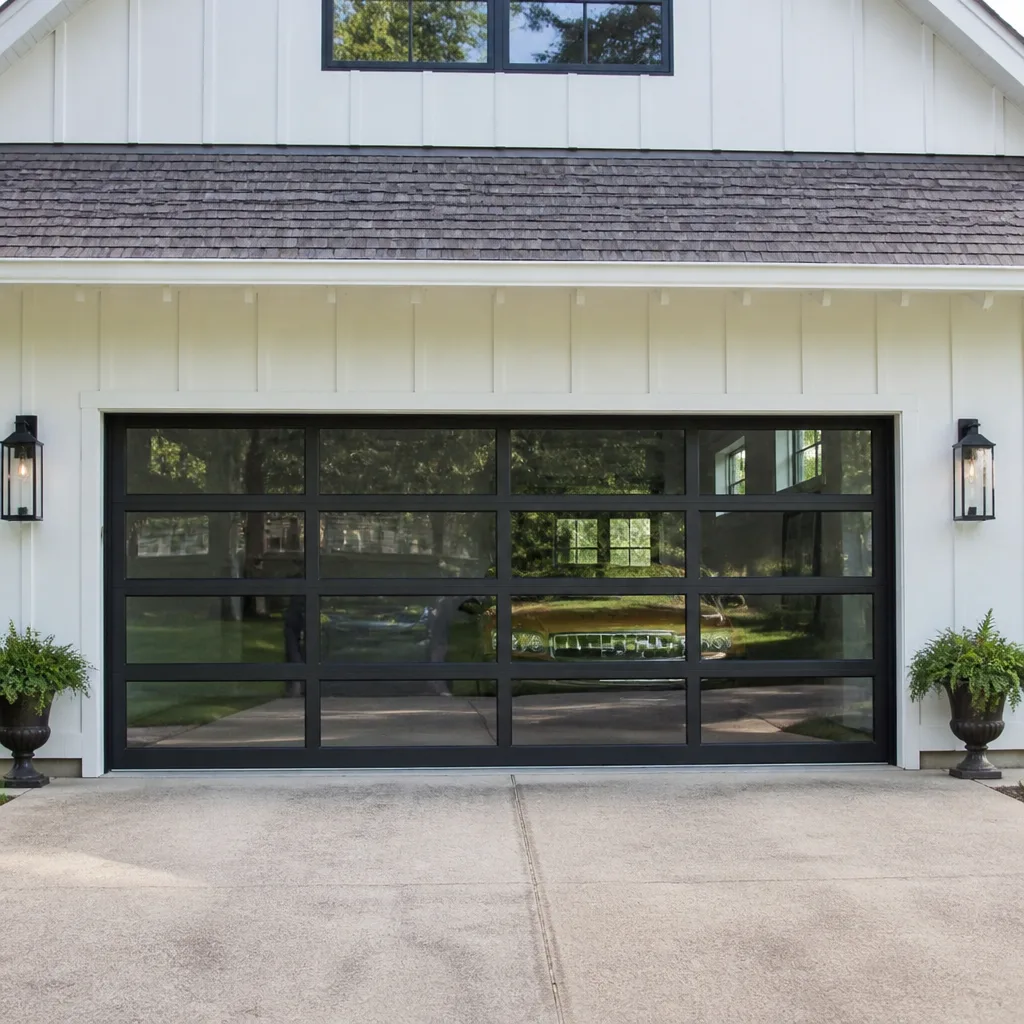 Full-view glass
 LiftMaster openers
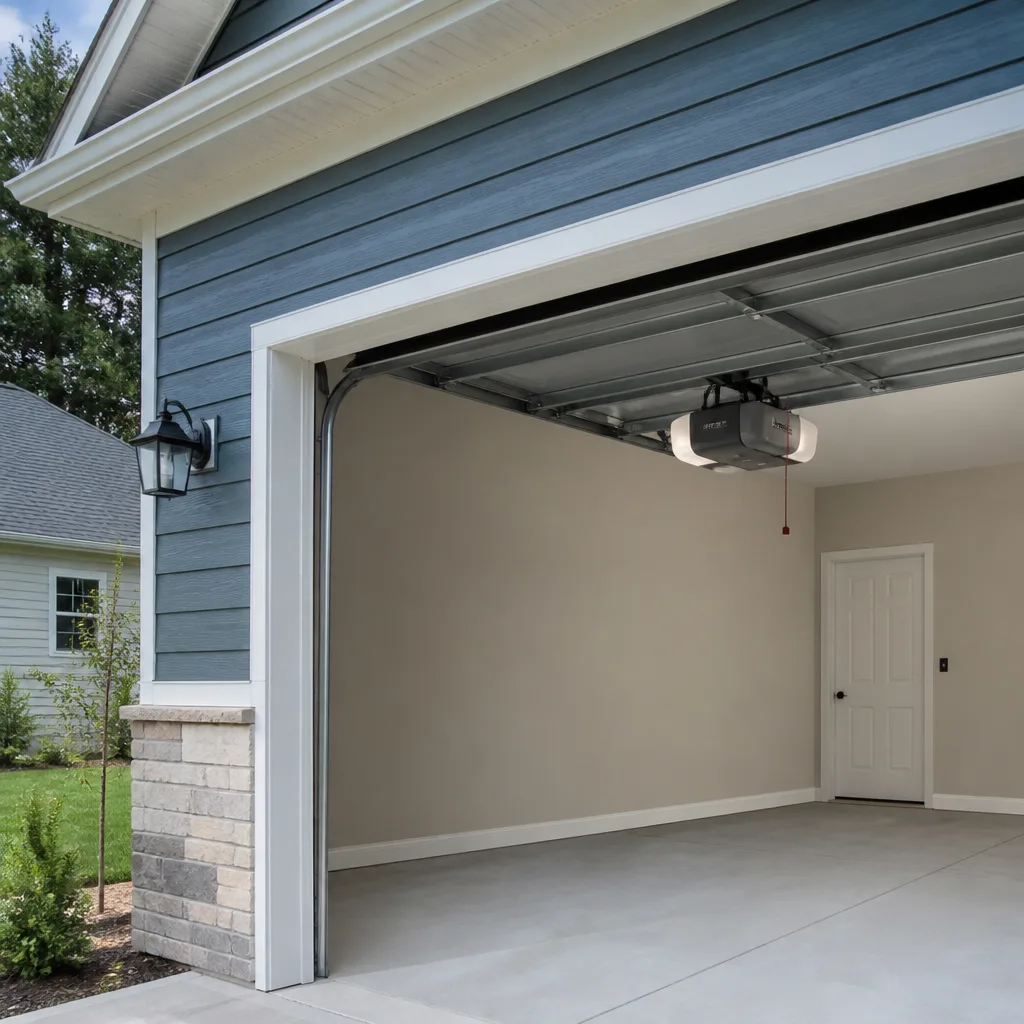 Chamberlain openers
Full 25-point door and opener safety check with every visit - springs, cables, rollers, tracks, and your LiftMaster or Chamberlain opener included
You get a price before we start. It does not change when the pro arrives.
Get your free estimateGarage Door Repair Maintenance Checklist for North Fort Myers Homeowners
Springs and openers get all the attention, and that’s exactly why so many North Fort Myers garage doors fail in ways nobody predicts. Most checklists you’ll find online were written for dry, mild climates, copying the same ten bullet points about oiling hinges and watching your panels. They miss the parts that actually break here: the bottom brackets, roller stems and cable drums that sit in humid Southwest Florida air and quietly rust between the times anyone looks at them. This guide is built from the failure patterns we see on North Fort Myers service calls, not from a manufacturer’s brochure. You’ll learn a monthly routine, how to test a seal against real Florida rain, why your lubrication schedule needs to be shorter than the label says, and what to inspect before hurricane season.
Quick Answer
The core of a good garage door maintenance checklist in North Fort Myers is a monthly visual inspection of the brackets, roller stems and cable drums for rust, a lubrication schedule tightened to every few months because of the humidity, a weatherstrip test with a garden hose rather than a flashlight, and an auto-reverse and wind-brace check before storm season. Springs, cables and the opener’s internal electrical work should stay in a technician’s hands. Everything else on this list is something you can do yourself without tools.
Styles & brands we work with
- Raised-panel steel
- Carriage house
- Modern flush
- Full-view glass
- LiftMaster openers
- Chamberlain openers
Table of Contents
- Monthly Checks for Humid North Fort Myers Conditions
- Why Corrosion Starts at the Bottom of Your Door
- Testing Your Weatherstrip Against Florida Rain
- Lubrication: Why Standard Intervals Are Too Slow Here
- Checking Your Wind Brace System Before Hurricane Season
- Testing Opener Sensitivity and Auto-Reverse in Summer Heat
- What You Can Check Yourself vs. What Needs a Technician
- A Season-by-Season Calendar for North Fort Myers
Monthly Checks for Humid North Fort Myers Conditions
A monthly walkaround takes ten minutes and catches most problems while they’re cheap to fix. The idea is to look at your door the way a technician does on arrival: from the floor up, not the ceiling down. Most homeowners glance at the panels and the opener and never get on their knees to see what’s happening at the bottom. That’s where the humidity does its work.
Here’s what to inspect each month:
- Bottom brackets and their bolts. Look at the flat metal brackets where the bottom roller attaches on each side. Check for orange-brown rust dust, pitting, or a bolt that looks like it’s pulling free. These should be watched, never adjusted or loosened by hand.
- Roller stems. The little pins the rollers spin on. One that squeaks or looks rusty needs attention. If a roller hangs at an odd angle, the stem may be failing.
- Cable drums at the top corners. Cables wind onto these drums. Look for frayed strands, rust stains on the drum, or cables that look slack or uneven side to side.
- Hinges and the track’s mounting bolts. Run a hand lightly along the track (don’t put fingers inside the track itself) and feel for loose hardware and rust bloom.
- The condition of the bottom rubber seal. A seal that’s cracked, torn or drooping lets water and insects right under your door.
Write down anything you see, even if it looks minor. A pattern you notice across a few months tells you more than a single glance. If you’re already seeing rust at the bottom brackets, that’s a signal to have the door looked at before it turns into a repair. Our garage door repair service covers this kind of hardware failure in North Fort Myers, and catching it early usually keeps it small.
Why Corrosion Starts at the Bottom of Your Door
The bottom of your door lives in a different environment than the top. It’s closest to the ground, it gets splash from rain running off the door, and it’s where the seal traps a little moisture after every storm. Warm humid air rises, the concrete slab below stays cooler, and any steel near that boundary collects condensation overnight. North Fort Myers sees plenty of that cycle, and it’s why hardware at the bottom of a door ages faster than the hardware up top.
The parts that suffer first:
- Bottom brackets. The most common corrosion point on a door, and the one most checklists skip entirely.
- Roller stems and their housings. Small steel parts with tight tolerances, so even light rust can make a roller stiff or noisy.
- Cable drums and the cable ends at the bottom. The windings and the bottom attachment are both vulnerable, which is why a frayed cable often starts low.
- Track fasteners and the lower hinges. Zinc plating wears thin and the steel underneath starts to spot.
Rust on a painted panel is mostly cosmetic. Rust on moving hardware isn’t, because the same corrosion that makes a hinge stiff also stresses the spring system that lifts the door. A dry-sounding squeak or a door that’s gotten harder to lift by hand can point back to a rusty hinge or roller. Our technicians have up to 9 years of experience reading that kind of wear, and knowing which spots need replacing versus cleaning off is part of the job. If a door is already grinding or dragging at the bottom, call (877) 317-7510 for a free estimate.
Testing Your Weatherstrip Against Florida Rain
The flashlight test – having someone look for light under the door – is close to useless in Southwest Florida. It tells you the seal isn’t touching. It doesn’t tell you whether a sheet of wind-driven rain will push under it. The only honest test is water. Take a garden hose on a low stream, not a sprayer, and run it slowly along the bottom and side seals from outside for a minute or two. Go inside and check. Do the same for the sides and the top.
What to look for:
- Water on the floor under the door. A bead or a puddle means the bottom astragal is worn or squashed and it’s time to replace it.
- Water along the door frame at the sides. The side seals can split or pull away from their retainer.
- Water dripping from the top edge. The header seal is often the first to fail because it’s out of sight.
- Daylight through a gap that the hose also drives water through. That’s the real signal, not daylight alone.
Run this test before the rainy season starts and again after any storm that drove rain sideways at the door. A failed seal lets water into the opener housing and the door’s hardware, and in North Fort Myers that water often stays there for days because the humidity won’t let it dry. Replacing weatherstripping is inexpensive; replacing a starting-to-rust opener is not.
Lubrication: Why Standard Intervals Are Too Slow Here
The label on most lubricants says to apply twice a year. In North Fort Myers, twice a year is often not enough. The reason is that standard interval assumes a moderate, seasonal climate where things dry out between applications. Here, warm air carries moisture most of the year, and the oil you put on a hinge in the spring is being thinned, diluted and pushed out by summer. We recommend a shorter interval: every few months, and after any stretch of sustained humid weather.
What to lubricate and what to leave alone:
- Hinges and the pivot points on rollers. A few drops of a garage-door-specific lubricant (not WD-40, which is a solvent, not a lubricant) on each hinge.
- The spring coils. A light coat on the spring is normal, but only from the outside of the coil. Don’t reach into a spring, and never try to unwind one.
- The opener’s drive rail. Follow the opener’s manual for the specific type of rail lubrication it needs, if any. Some openers use a belt or screw drive and don’t need oil on the rail at all.
- Track. Don’t grease the track. Grease attracts dust and grit, which make rollers drag. Clean it, don’t lube it.
A simple test: open and close the door by hand (with the opener disengaged so the door is disconnected from the motor) and listen. A well-lubricated door is quiet and moves with steady resistance. A dry or dusty door squeaks and feels grabbier at certain points. If you can’t get it quiet with lubrication, there may be a hinge, roller or spring problem underneath the noise. Learn more on our garage door opener repair page, or call us to look at the whole system.
Checking Your Wind Brace System Before Hurricane Season
A garage door is the largest opening on most houses, and in a storm it’s a weak point. Wind brace systems – the extra horizontal struts or reinforcement bars a door can have added – help it resist wind pressure. Whether your door has them depends on the door and how it was originally installed. If you’re not sure, this is one for a professional. What you can do yourself is check that whatever reinforcement is already on the door looks intact.
Before hurricane season, inspect:
- The struts across the door’s panels. They attach with screws. Look for loose screws or a strut that’s bowed or separating.
- The bottom bracket and the door’s bottom rail. These anchor the door against wind. Any rust or looseness at the bottom needs to be looked at.
- The track’s wall anchors. The track is bolted to the frame; those bolts should be snug and not pulling out of the wood.
- The door’s overall alignment. A door that’s sagging or sitting unevenly is more vulnerable to wind pressure.
- The opener’s manual lock position. Check that your opener is set the way its manual specifies for storm conditions. Follow the manual, not this guide.
Don’t add reinforcement to a door yourself. Brackets and struts that are too heavy or in the wrong place can overload a spring or damage a panel. If you want your door assessed for wind bracing, call (877) 317-7510 and we’ll give you a free estimate on what it would take. Getting this done in the mild months is easier than during a scramble. For the standalone spring side of things, our garage door spring repair page covers what’s involved and what to watch for.
Testing Opener Sensitivity and Auto-Reverse in Summer Heat
Your opener’s safety reverse is a push-sensor system. When the door meets resistance, it’s supposed to reverse. When the safety beams at the floor are broken, it’s supposed to stop. In summer heat, both systems get tested by the door itself: hot metal expands, panels can bow slightly, and a track can shift in a way that changes how much resistance the door presents.
Test auto-reverse monthly, following your opener’s manual for the exact procedure on your model. The general approach is to lay a roll of paper towels or a short 2×4 flat on the ground under the door, then close the door with the opener and see if it reverses when it touches the object. Next, test the safety beams: with the door open, pass a hand or a box through the beam while the door is closing and confirm it stops and reverses. If either fails, stop using the opener and have it serviced. A door that won’t reverse is a serious safety issue.
The heat also affects beam alignment. Both sensors sit at the floor, and the brackets that hold them can get bumped or shift as the track expands and contracts. If your opener occasionally reverses for no reason, or the door refuses to close and the opener’s light is blinking, the first suspect is beam alignment. A quick check is to make sure nothing is in the way of the beams and that the sensors are facing each other. North Fort Myers summers put a lot of thermal cycling on a garage, so plan to re-check the beams after the first hot spell. Look at the sensor lights while you work (don’t stare into them from up close).
What You Can Check Yourself vs. What Needs a Technician
The line between a safe DIY check and a job for a technician matters, and it’s drawn mainly by the spring system. The torsion springs above your door (or extension springs if your door has them) hold enormous stored energy. They can cause serious injury if released or handled incorrectly. Same for the cables, which are under constant tension. These parts need a trained professional, and we mean that. There is no safe way to adjust or replace a spring without proper tools and training.
Split your checklist like this:
- Safe for you: visual inspection for rust, loose hardware, and wear on the seal; testing auto-reverse with the object method; checking safety beams; light lubrication of hinges and rollers; cleaning the track.
- Not for you: adjusting or replacing springs, adjusting cable tension, replacing bottom brackets, opening the opener’s housing, adjusting the opener’s force limits, repositioning the door’s cable drums.
The reason the line sits where it does is not just danger. It’s that a spring or bracket job done wrong on a humid North Fort Myers door often fails faster than the original. Our technicians have up to 9 years of experience with spring and bracket work, and we’re factory-familiar with the major door and opener brands you’ll find installed in this area, from LiftMaster openers to Clopay, Amarr, Wayne Dalton, Craftsman and Raynor doors. If you’re not sure whether a problem is a check or a repair, ask. A free estimate tells you.
A Season-by-Season Calendar for North Fort Myers
Treat garage door maintenance as a rhythm rather than a single spring-cleaning. The right cadence here follows the humidity and the storm season.
- Every month: visual walkaround – bottom brackets, roller stems, cable drums, hinge and track bolts. Test auto-reverse and safety beams.
- Every few months (shorten in long humid stretches): lubricate hinges, rollers and the spring exterior. Clean the track. Check the seal for wear.
- Before the rainy season: garden-hose test of the bottom and side seals. Re-treat any rust spots on the door’s hardware. Check the bottom seal isn’t sitting in standing water after storms.
- Before hurricane season: inspect wind brace struts, bottom brackets, track anchors and the door’s alignment. Have the door assessed if bracing is unclear.
- After any significant storm: re-check the door’s alignment, the track, and the opener’s operation. Test auto-reverse again, because a knock can put the sensors out of alignment.
- Once a year (professional): have a technician inspect springs, cables, brackets and the opener’s internal settings. This is the safest way to catch wear before it becomes a failure.
A routine spread through the year is easy to keep up with. Trying to fix a broken door during a storm is not. If you want the annual professional check, our garage door repair North Fort Myers team handles it, and we can work with your insurer on any related claims.
Common Mistakes to Avoid
- Skipping the bottom brackets. The single most overlooked part of a garage door, and the most common cause of corrosion-related failures here. Check them every month.
- Greasing the track to “make it quieter.” Grease on a track attracts grit, which wears rollers faster. Clean it, don’t lube it.
- Lubricating on the label’s twice-a-year schedule. In North Fort Myers that’s too slow. Shorten the interval to every few months.
- Testing weatherstripping with a flashlight only. The flashlight tells you the seal is touching. The hose tells you whether rain will get in.
- Waiting until a storm is forecast to check the wind brace. Bracing problems are easier and safer to address in the mild months, before there’s any rush.
- Trying to adjust a spring or cable yourself. Springs and cables are under stored energy. This is a hard stop for DIY work, full stop.
- Ignoring the opener’s safety reverse because “it’s always been fine.” The system can drift out of adjustment, especially after a hot summer. Test it monthly.
See the difference
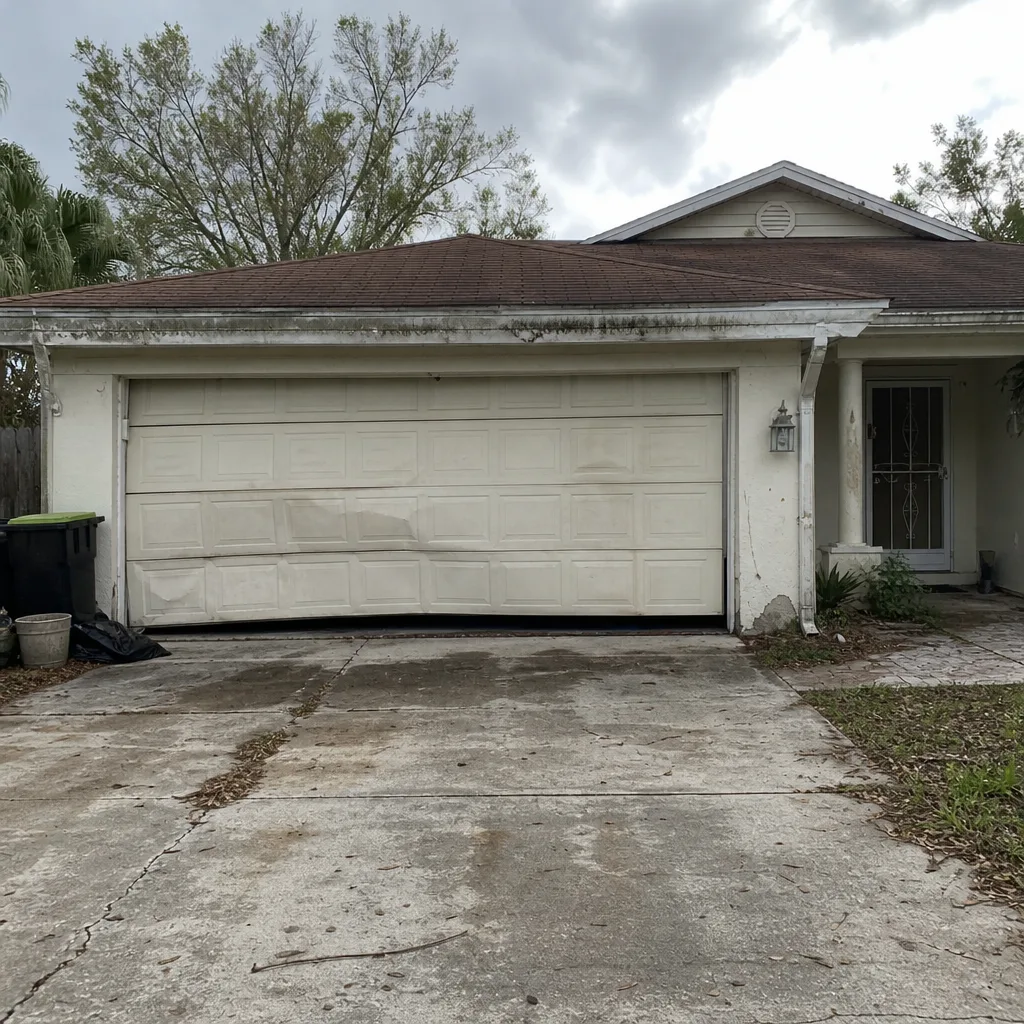 Before
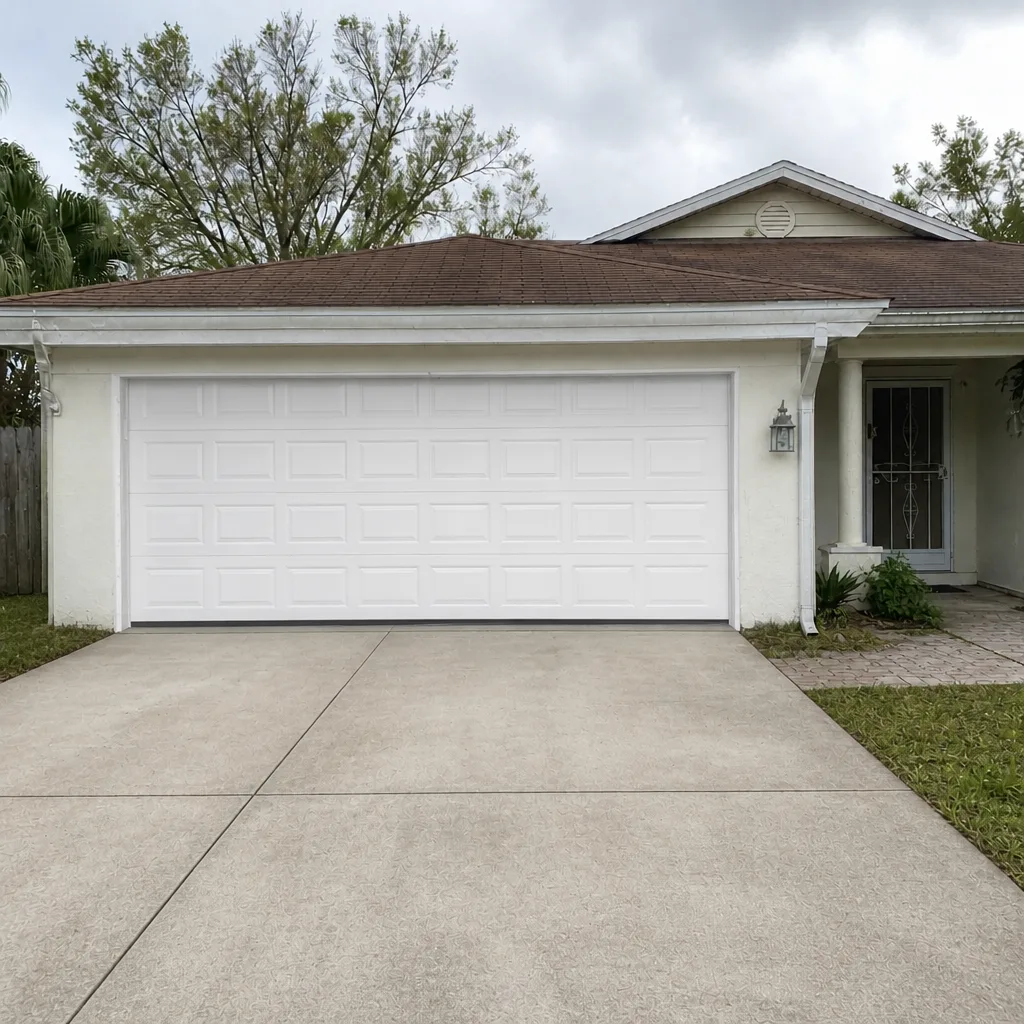 After
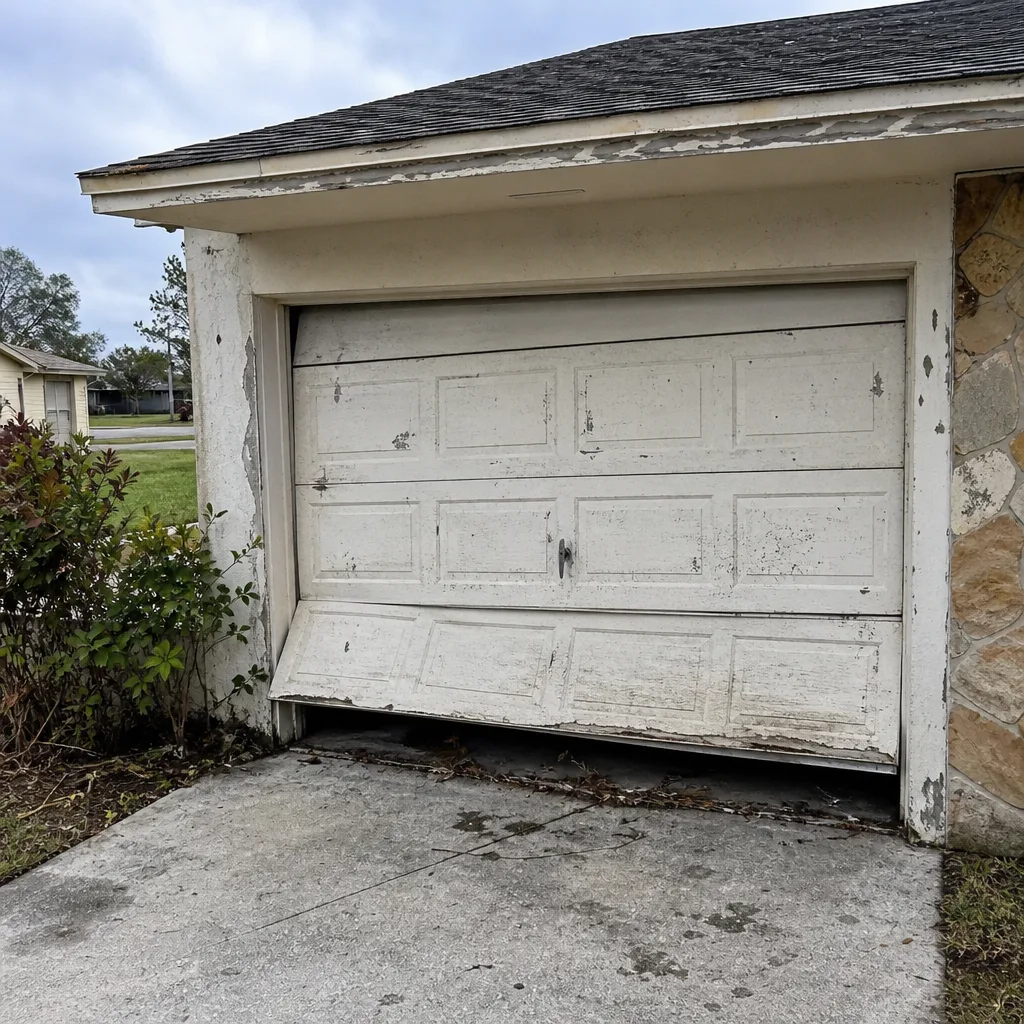 Before
 After
 Before
 After
When to Call a Professional
Call a trained technician when the door won’t open or close, when you see a broken spring or a cable hanging loose, when the door is crooked or heavy to lift by hand, when the opener’s light is blinking and the door won’t close, or when you see rust or looseness at the bottom brackets. Those are signals of a real problem, not a tune-up. A dedicated specialist – not a general handyman – has the tools and the training to handle spring and cable work safely. Check the vetted local professional you’re connected with is licensed and insured as their state requires. Expect a written estimate before any work begins. Garage Door Repair North Fort Myers offers free estimates in North Fort Myers, and we’re available for emergency service when the door won’t move. Call (877) 317-7510 to get on the schedule.
Frequently Asked Questions
Every few months here, not just twice a year. The humidity in North Fort Myers keeps the air moist for much of the year, which thins and pushes out standard lubricant faster than the bottle’s label assumes. Shorten the interval during long humid stretches, and give the hinges, rollers and spring exterior a light coat each time. Never use a solvent instead of a proper lubricant.
No, and no guide should suggest trying. A torsion or extension spring holds enormous stored energy, and a spring that’s released or handled wrong can cause serious injury. Springs and cables are a trained-professional job. Our spring repair service covers North Fort Myers and is one of our named specialist services. If you suspect a spring is broken, call (877) 317-7510 – estimates are free.
Run a slow garden-hose stream along the bottom and side seals from outside, then check inside for water on the floor or along the frame. A flashlight test that shows daylight is a hint, but water is the real test. If the hose test finds water, the seal likely needs replacing. That’s affordable and worth doing before rainy season.
Inspect the door’s wind brace struts, the bottom brackets, the track’s wall anchors and the door’s overall alignment. Confirm you know how your opener is meant to be set for a storm (check its manual). If you’re not sure whether your door has correct wind bracing, have it assessed by a professional – don’t add braces yourself. Call (877) 317-7510 for a free estimate on a door assessment.
Most likely it’s the safety beams at the floor going out of alignment as the heat expands the door and track. First, clear the area between the beams and check that both sensors point at each other. If that doesn’t solve it, or if the door won’t reverse when it should, stop using the opener and have it serviced. An opener that won’t reverse is a safety problem.
Yes, we work on whatever brand is already in your garage, no brand switch required. That includes LiftMaster, Chamberlain, Genie, Clopay, Amarr, Wayne Dalton, Craftsman and Raynor. We’re a garage door specialist, not a general contractor, so the whole system is in scope. Call (877) 317-7510 for a free estimate on repair, maintenance or a new door.
The Bottom Line
The maintenance checklist that matters in North Fort Myers is the one that pays attention to the bottom of the door, not just the top. Monthly visual checks of bottom brackets, roller stems and cable drums catch corrosion before it becomes a repair. A garden-hose weatherstrip test tells you the truth about your seal. A shortened lubrication schedule keeps the hardware moving in the humidity. Wind brace and opener checks before storm season protect the two most critical systems on the door. Springs and cables stay with a trained professional – always. Run the checklist, and when something needs a real repair, call (877) 317-7510 for a free estimate. We work on the brand already in your garage.
Written by the team at Garage Door Repair North Fort Myers.