Last updated November 22, 2026
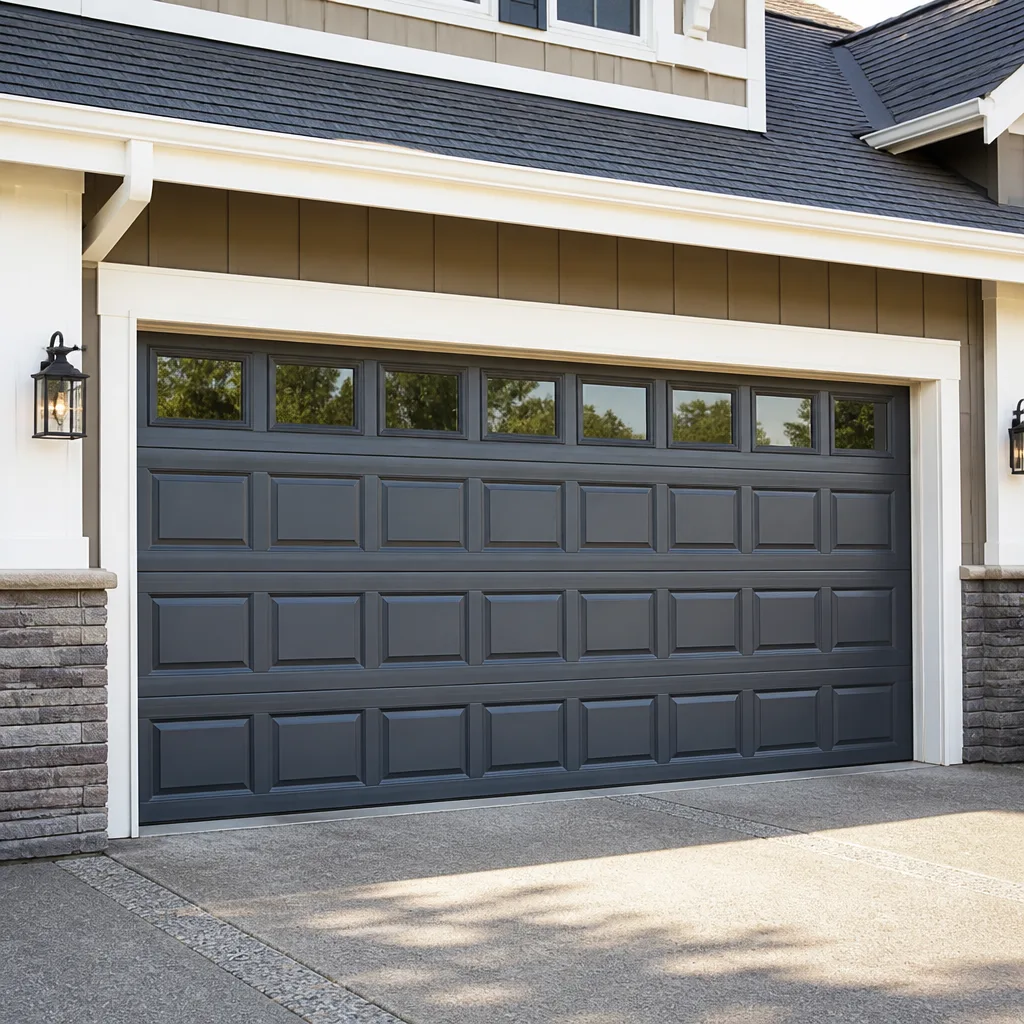 Raised-panel steel
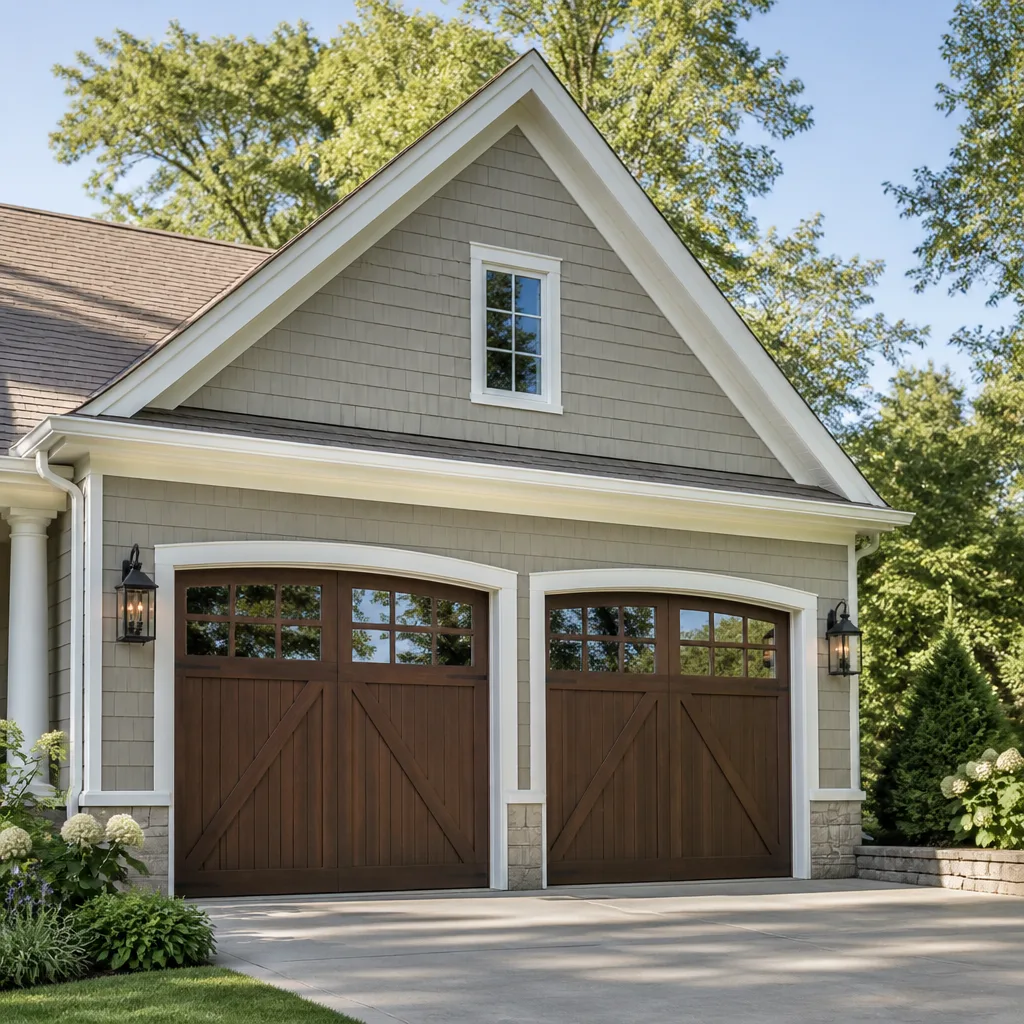 Carriage house
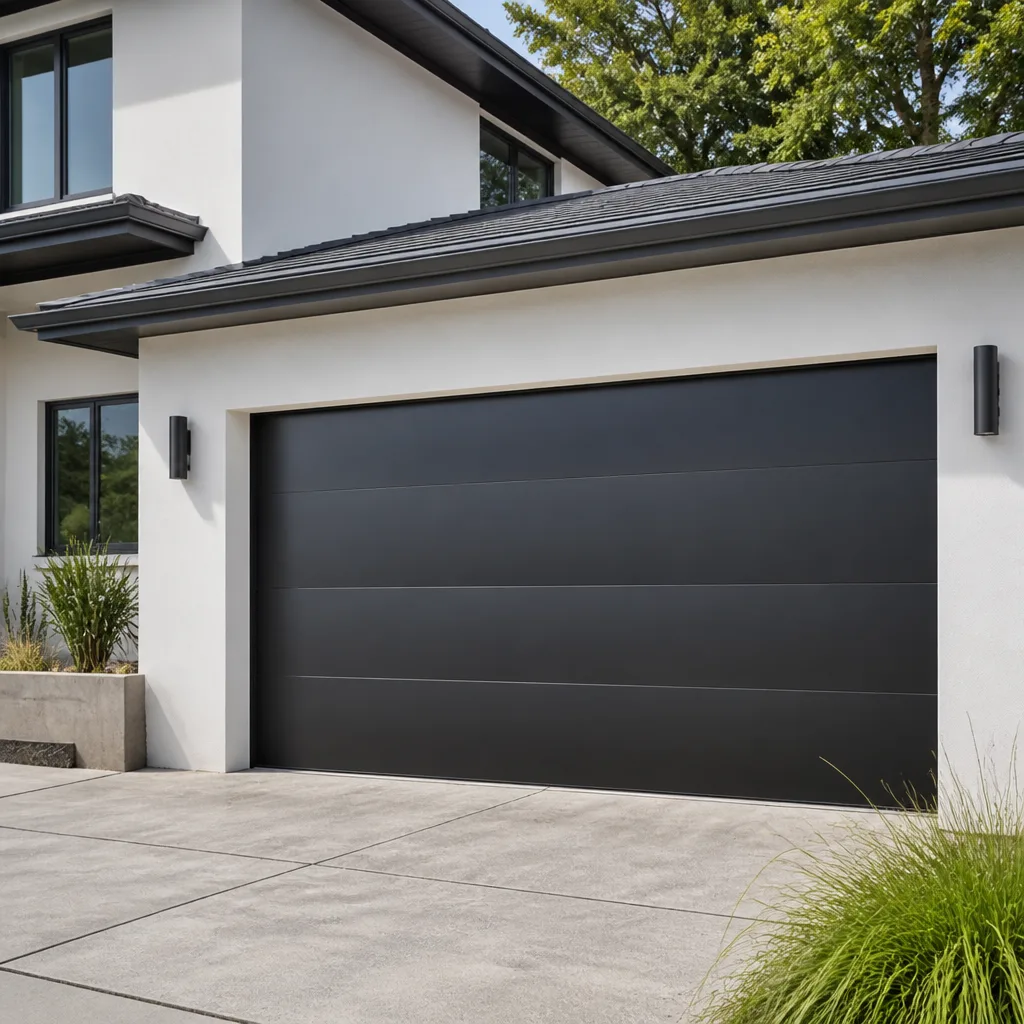 Modern flush
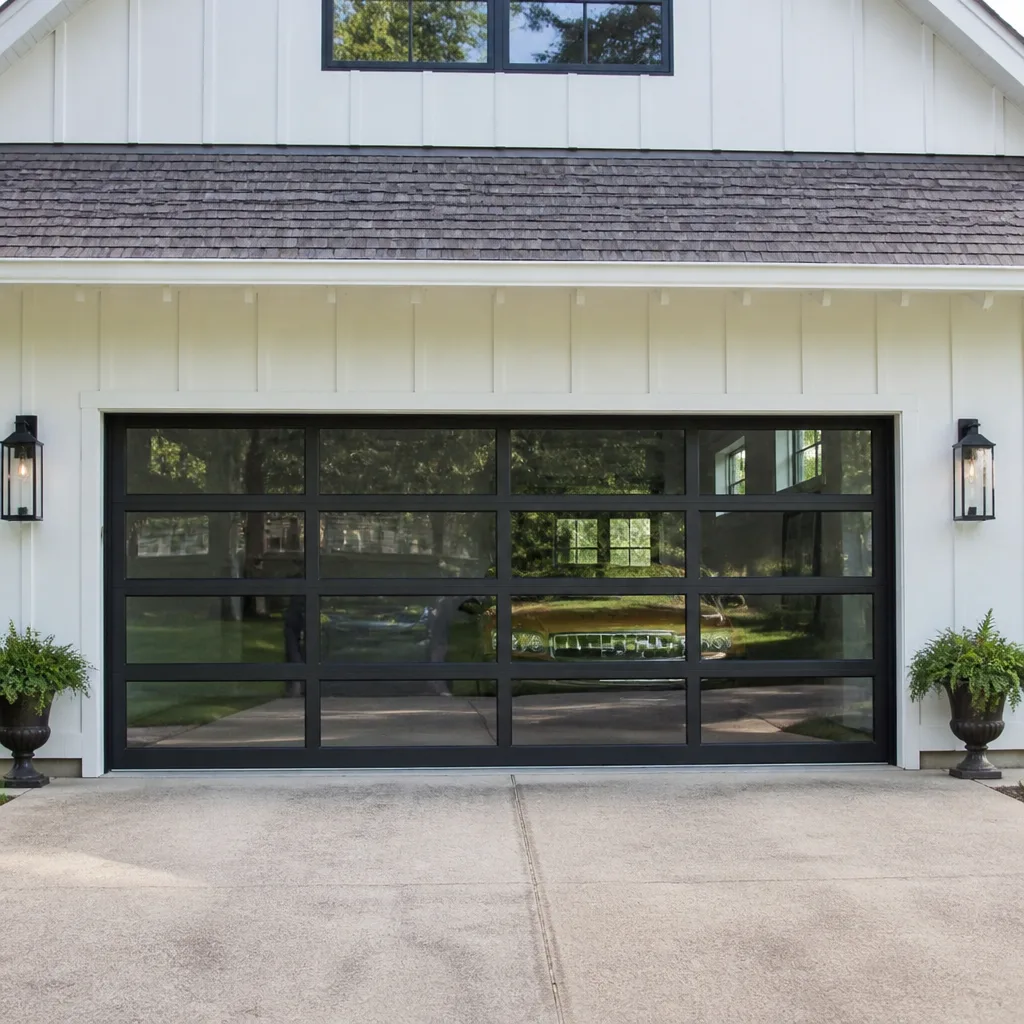 Full-view glass
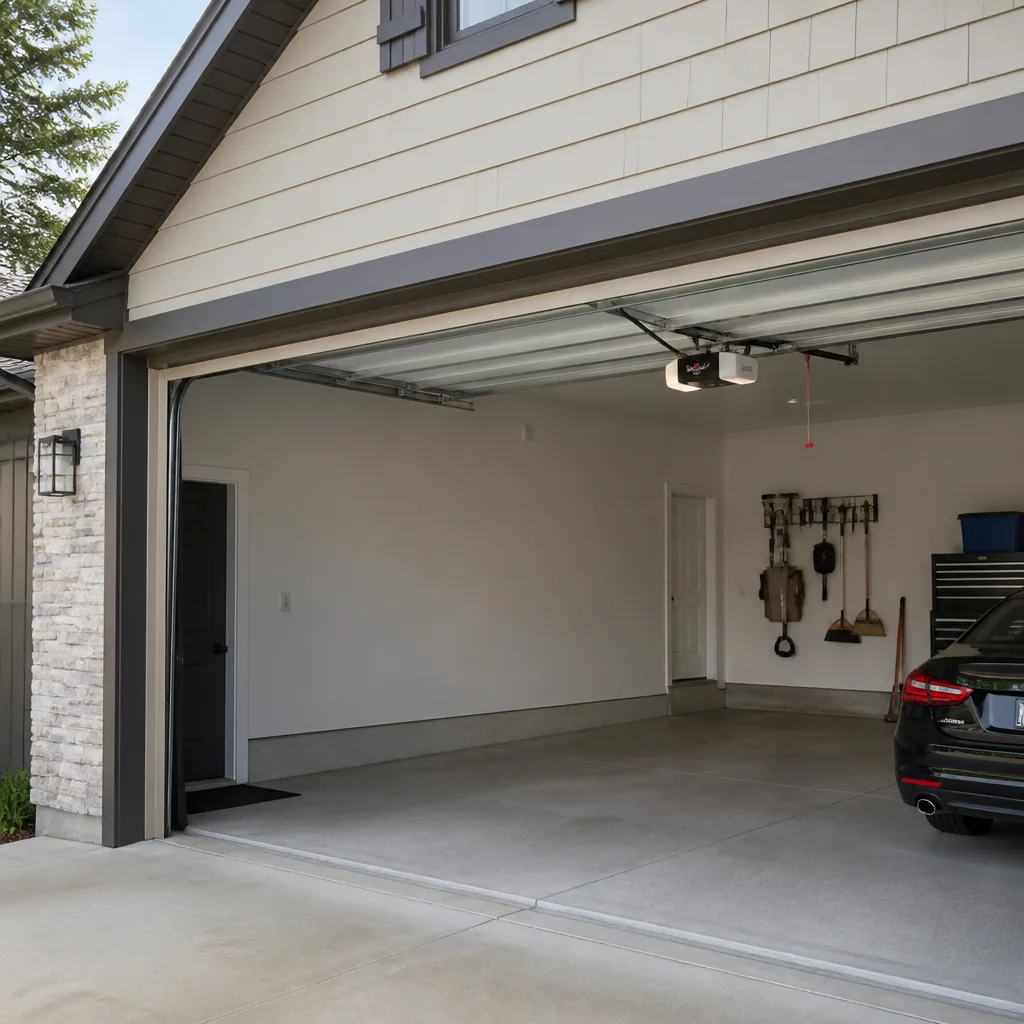 LiftMaster openers
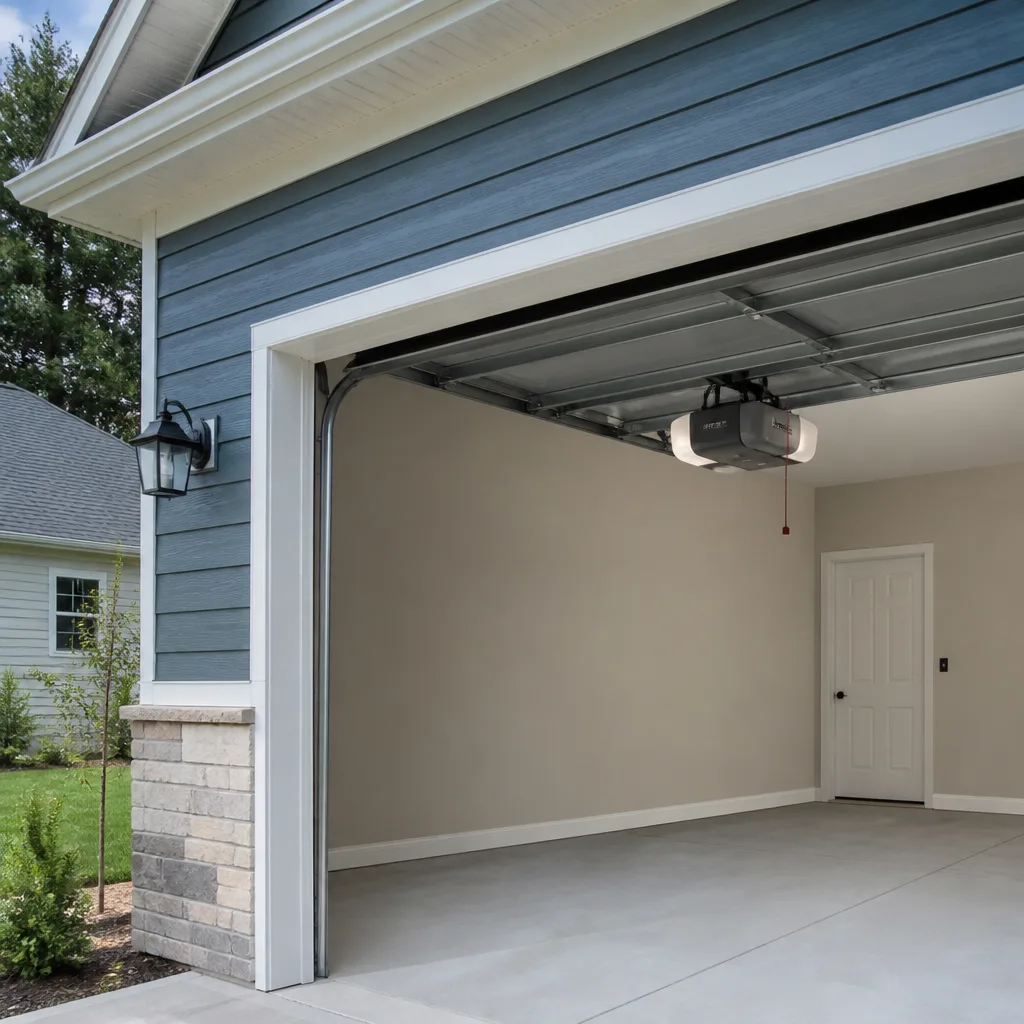 Chamberlain openers
Full 25-point door and opener safety check with every visit - springs, cables, rollers, tracks, and your LiftMaster or Chamberlain opener included
You get a price before we start. It does not change when the pro arrives.
Get your free estimateGarage Door Warning Signs: A North Fort Myers Homeowner’s Reference Guide
A garage door that hesitates for half a second before it moves isn’t quirky. It’s telling you exactly which component is about to fail, and the translation is simpler than most homeowners think. Most emergency calls we get in North Fort Myers follow the same pattern: something odd showed up weeks or months earlier, everyone adjusted to it, and then the door stopped moving altogether. This guide maps the sounds, sights, and opener behaviors worth paying attention to against the parts that cause them, so you can tell the difference between a squeak you can live with and a torsion spring that’s telling you it’s finished. By the end you’ll know what to check, what to leave alone, and when a door stops being worth guessing about.
Quick Answer
The warning signs of a failing garage door cluster into three groups: unusual sounds (grinding, popping, squealing, rattling), visible wear (uneven gaps, frayed cables, sagging panels, crumbling weatherstripping), and changes in opener behavior (slower travel, jerking, reversed direction, or a remote that works only up close). Any one of these on its own is worth a look. Two or more appearing together, especially a loud pop followed by a door that won’t lift, means you stop using it and call for a trained inspection rather than keep cycling it.
Styles & brands we work with
- Raised-panel steel
- Carriage house
- Modern flush
- Full-view glass
- LiftMaster openers
- Chamberlain openers
Table of Contents
- What the Sounds Are Telling You: Grinding, Popping, Squealing, and Rattling
- Visual Warning Signs That Matter in North Fort Myers Humidity
- Opener Behavior That Predicts Motor or Logic Board Failure
- How to Tell a Spring Replacement Is Coming
- Nuisance Adjustment or Safety-Critical Repair? How to Tell
- What North Fort Myers Weather Does to a Door Between Seasons
- A Numbered Walk-Around You Can Do This Week
- What to Check Without Tools, and What Never to Touch
What the Sounds Are Telling You: Grinding, Popping, Squealing, and Rattling
Every sound a garage door makes belongs to a specific part. Once you know the mapping, you can describe the problem on the phone well enough that the right parts and the right approach show up the first time. In our experience, homeowners in North Fort Myers tend to describe all four of these sounds as “noisy,” which doesn’t tell a technician much. Here’s the translation.
Grinding
Grinding is metal-on-metal, and it usually tracks back to rollers that have seized or bearings that have dried out. A roller that should spin freely starts dragging across the track instead, and that drag scuffs the track and loads the opener motor harder with every cycle. Left alone, grinding turns into bent track and a motor that runs hot. Grinding is one of the more fixable early warnings if you act on it.
Popping
A single sharp pop, often followed by the door dropping an inch or two and then refusing to lift, is the sound of a torsion spring breaking. It’s the loudest, most alarming sound in the list, and it’s also the one where the correct response is simple: stop using the door and call for garage door spring repair. Never try to lift a door with a broken spring by hand. The spring is what counterbalances the door’s weight, and without it the full weight of the door is on you.
Squealing
Squealing is friction, and friction is usually lubrication-related. Dry hinges, dry rollers, or a torsion tube that hasn’t seen proper lubricant in a long while will squeal through part of the travel and then quiet down. On its own, squealing is one of the least urgent signs, though it’s worth noting that the type of lubricant matters. A proper garage door lubricant stays put. Cooking spray and general-purpose oils attract grit and make things worse.
Rattling
Rattling is looseness. Loose hinge bolts, a loose track bracket, or a panel that’s separated from its frame will rattle, especially at the moment the door starts up or comes down. Rattling is usually an adjustment, but it can also be the first sign that a panel has been knocked out of alignment, which is common after a car nudges the bottom section.
- Grinding – seized rollers or dry bearings, stressing the track and motor
- Popping – a broken torsion spring; stop using the door
- Squealing – lack of lubrication on hinges, rollers, or torsion tube
- Rattling – loose hardware or a misaligned panel
Visual Warning Signs That Matter in North Fort Myers Humidity
North Fort Myers humidity is rough on garage door hardware in ways that homeowners moving here from drier climates don’t expect. The moisture in the air all summer accelerates rust on steel components, and the temperature swings between a hot afternoon and a cooler evening work the door’s materials back and forth. Certain visual warnings show up here more often than the national checklists would suggest. Here’s what to walk outside and look at.
Rust patterns
Rust on the bottom of the door is normal wear. Rust on hinges, roller stems, track bolts, or the torsion tube is a warning. Surface rust on a hinge can be cleaned and treated. But rust that has penetrated a hinge pin means the hinge is now stiff, and a stiff hinge loads the opener on every cycle. Steel doors from Clopay, Amarr, and Wayne Dalton all handle Florida humidity differently depending on the finish, and knowing what brand you have helps a technician predict where the wear will land. When we work on your door, we work on the brand already in your garage. No swapping brands to make the repair easier.
Cable fraying
Look at the two cables that run up the sides of the door. They should be smooth and consistently tensioned. Frayed strands, kinks, or a cable that looks like it’s starting to unspool are serious. A cable under tension that fails can whip with enough force to injure. That’s not a homeowner inspection item beyond looking; if you see fraying, stop and call.
Weatherstripping collapse
The rubber seal along the bottom of the door is one of the first things to give up in Florida. Between heat, humidity, and the sun on a south-facing door, weatherstripping hardens, cracks, and flattens. You’ll notice light coming under the door, water blowing in during a heavy rain, or small pests finding a gap. This is one of the cheaper repairs on the list and one of the most worthwhile, since a sealed door also eases the load on the opener.
Panel and gap checks
Stand outside and look at the door closed. It should sit parallel to the floor and even along both sides. Uneven gaps, a sagging top panel, or a bottom section that doesn’t sit flush all suggest the door has gone out of balance. This is often the earliest sign of a spring losing tension, and it’s something you can spot in a ten-second look.
Opener Behavior That Predicts Motor or Logic Board Failure
The opener is the brain of the system, and it broadcasts its problems before it dies. Behavioral changes tend to come in a predictable order, which is what makes them useful. If you know the progression, you can schedule garage door opener repair before the motor quits entirely and you’re locked out of your garage.
What to watch for
- The door starts slower than it used to. If the door seems to gather itself before moving, the motor is straining. Usually the cause is mechanical wear elsewhere on the door, not the opener itself.
- The door jerks during travel. A jerky door is a door that’s fighting something – a dry track, a bad roller, or a spring that’s lost some tension.
- The door reverses without a good reason. Safety sensors can drift, or the down-limit setting can slip. This is usually an adjustment, but it’s a safety adjustment that shouldn’t be deferred.
- The remote only works close to the door. Weak range points to the logic board or the antenna connection on the opener head, not the remote.
- The opener keeps trying to run after the door has stopped. The motor is getting signals it shouldn’t. Stop using it and have it looked at.
Brand-specific behavior
Brands behave in characteristic ways, and a technician who’s worked on Genie, LiftMaster, and Chamberlain units across many homes will often diagnose a symptom before they even open the housing. A Genie opener that chatters at the top of travel isn’t presenting the same problem as a LiftMaster that clicks once and goes silent. That’s part of why we’re factory-familiar with the major brands. It shortens the diagnostic window and it means the fix uses the right parts for the unit you already own.
How to Tell a Spring Replacement Is Coming
Torsion springs don’t fail at random. They give notice. The trick is learning what a spring that’s still working looks like versus one that’s on its way out, and knowing which symptoms justify replacing the spring versus a much smaller maintenance visit. First, the safety line: springs are under extreme tension, and the tools that adjust them are specialized for a reason. Do not try to look more closely at a spring under tension, do not try to move it, and do not try to lubricate it beyond a light spray from a distance. A trained technician handles this work.
Signs the spring is on its way out
- The door feels heavier when you lift it by hand (only test this if the door is fully disconnected from the opener and you’re comfortable – otherwise don’t).
- The door lifts unevenly, with one side lagging behind the other.
- The door sags open a few inches when you release it at the halfway point instead of holding position.
- You can see a visible gap in the coil of either torsion spring.
- The opener seems to be working harder without any other symptom showing up.
Signs it’s just lubrication and adjustment
- Squealing that quiets down after a proper spray of garage door lubricant.
- A single door that runs smoothly but makes more noise than it used to.
- Minor rattling at the hinges.
- An opener that beeps a warning because a safety sensor got bumped.
If you’re seeing just a squeak and a rattle, that’s maintenance. If you’re seeing a lift that’s uneven, a sag, or a visible gap in the coil, that’s a spring that’s telling you it’s ready to retire. The longer you wait past that point, the higher the chance the next symptom is a loud pop and a door that won’t move. Call for garage door repair promptly in that case; most spring jobs are straightforward once a technician is on site and you know what you’re dealing with.
Nuisance Adjustment or Safety-Critical Repair? How to Tell
Not every symptom deserves a same-day call, and not every symptom can wait. The distinction matters because a nuisances that get ignored can become safety issues, and safety issues that get ignored can become injuries. Here’s how to sort them.
Usually a nuisance adjustment
- A safety sensor that’s been bumped and needs realignment.
- Loud hinges that respond to proper lubrication.
- A remote with a weak battery or a code that needs to be re-paired.
- The door reversing because something passed through the sensor field.
- Weatherstripping that needs replacing.
- A track that has shifted slightly out of vertical.
Safety-critical, call now
- Broken torsion spring (visible gap, door won’t lift, loud pop earlier).
- Frayed or kinked cables.
- A door that dropped off one track or is hanging at an angle.
- Any door that reverses without obstacle (the downforce may be set too high).
- A door that has come off its rollers or is jammed in a position where it can’t be safely lowered.
- Any symptom that appeared after an impact, like a car nudging the door.
When the door won’t move and access or security is the issue, that’s when you stop reading and call. Our Garage Door Repair North Fort Myers service includes emergency garage door service for situations where access and security can’t wait until Monday.
What North Fort Myers Weather Does to a Door Between Seasons
North Fort Myers doesn’t freeze, which removes the freeze-thaw wear that eats garage doors in northern states. What it has instead is heat, humidity, and a rainy season that stresses different points in the system. A door that runs quietly all winter can start showing symptoms in June, and it’s not from misuse.
Summer humidity
Summer is when rust progresses fastest and when weatherstripping takes the hardest hit. The humidity gets into every hinge and roller stem, and any place the paint or finish has been compromised will start to corrode. The temperature inside a garage on a July afternoon is high enough that lubricants thin out faster, which means doors that got a light coat in spring might need a top-up by mid-summer. It’s also the season when homeowners notice squealing more than in cooler months, simply because the friction is higher.
Rainy season check-ups
The rainy season puts the weatherstripping to the test. A door that lets a small puddle in during heavy rain tells you the seal has flattened or the bottom panel has warped. If you check once at the start of summer and once at the end, you’ll catch most of these before they become repairs. The same goes for the panels themselves: a steel door that’s been exposed to Florida sun and rain for several years will show the wear at the seams before it shows anywhere else.
What doesn’t apply here
You can ignore every list on the internet about freeze-thaw damage and snow load. They don’t happen here. If you’ve moved to North Fort Myers from a northern state and read that your door needs winterizing, that’s not a concern in this climate. The maintenance that matters is humidity, heat, and rain, not cold.
A Numbered Walk-Around You Can Do This Week
Fifteen minutes, no tools, and a flashlight. This is the walk-around we’d suggest any homeowner in North Fort Myers run at least twice a year. It won’t fix anything, but it will tell you what to talk about when you call.
- Look at the door from outside, closed. Even gaps on both sides, parallel to the floor, no sagging panels.
- Look at the bottom seal. No light coming under, no crumbling rubber, no gaps at the corners.
- Look at the springs above the door. No visible gap in the coil. Don’t touch them.
- Look at the cables on both sides. Smooth, no frayed strands, no kinks.
- Look at the hinges and rollers. No rust pushing through the hinge pins, no wobble.
- Open and close the door once from inside. Any grinding, popping, or squealing stands out immediately.
- Test the safety sensors. Wave an arm through the beam while the door is closing. It should reverse.
- Test the manual release. With the door closed, pull the release handle. If the door is too heavy to lift by hand, the springs are suspect and you call a technician.
- Re-engage the release. Cycle the door once to confirm normal travel.
- Note what you found. Even small symptoms are worth writing down, because patterns across a few months tell a technician more than a single phone description.
What to Check Without Tools, and What Never to Touch
Knowing the line between “look at it” and “leave it alone” is the single most useful skill in this whole guide. Some of the components on a garage door are safe to inspect. Others carry enough energy to injure you badly if handled wrong, and there’s no reason for a homeowner to test that. Our technicians have up to 9 years of experience with the whole system, and there’s a reason the spring and cable work stays on our side of the line.
Safe to check yourself
- Everything visual: gaps, rust, weatherstripping, panel alignment.
- Safety sensor function (wave something through the beam).
- The manual release to confirm the door’s balance.
- Hinge and roller condition by eye.
Leave to a trained technician
- Torsion springs in any state. Under tension, they can release all their stored energy in an instant.
- Cables under tension.
- Anything electrical inside the opener housing.
- Track alignment work that requires moving the door off the rails.
- Any adjustment made when the door is partially disconnected and unsupported.
If the door is stuck and access matters, call for emergency garage door service. Otherwise, a scheduled inspection is the right move. Our technicians have worked across all the major brands – Genie, LiftMaster, Chamberlain, Clopay, Amarr, Wayne Dalton, Craftsman, and Raynor – so whatever’s in your garage, the fix uses the unit you already have.
Common Mistakes to Avoid
- Treating a squeak as normal. A squeak is friction, and friction is wear. A light spray of proper garage door lubricant on the hinges, rollers, and torsion tube resolves most of it. Ignoring it lets the friction work its way into bigger parts.
- Using WD-40 or cooking oil as lubricant. These attract grit and dust, and they don’t stay on the parts that need them. Florida humidity turns a bad lubricant into a grinding compound. Use a lubricant made for garage door hardware.
- Assuming the opener is the problem. Nine times out of ten, when a door won’t lift, the opener is doing exactly what it should – it just can’t lift a door that’s fighting a dead spring or a bad roller. The motor is often the messenger.
- Testing the springs by hand. Homeowners sometimes try to see if the spring “still has tension” by grabbing it. This is the single most dangerous thing anyone can do on a garage door. If a spring looks suspect, don’t touch it.
- Cycling a door with a frayed cable. A cable under tension that fails doesn’t just drop the door. It can whip. If you see fraying, stop using the door.
- Letting weatherstripping rot into the bottom panel. When the seal fails, water works its way into the panel itself, and a bottom section that should have been a cheap replacement becomes a full panel job. Check the seal every season in North Fort Myers. The rain finds every gap.
- Waiting for the door to fully fail before calling. Every emergency call we get had earlier signs, and the earlier signs are almost always cheaper to fix. A spring that’s replaced before it breaks is a spring replacement. A spring that breaks along with the door cycling on a dead spring can take the opener motor with it.
See the difference
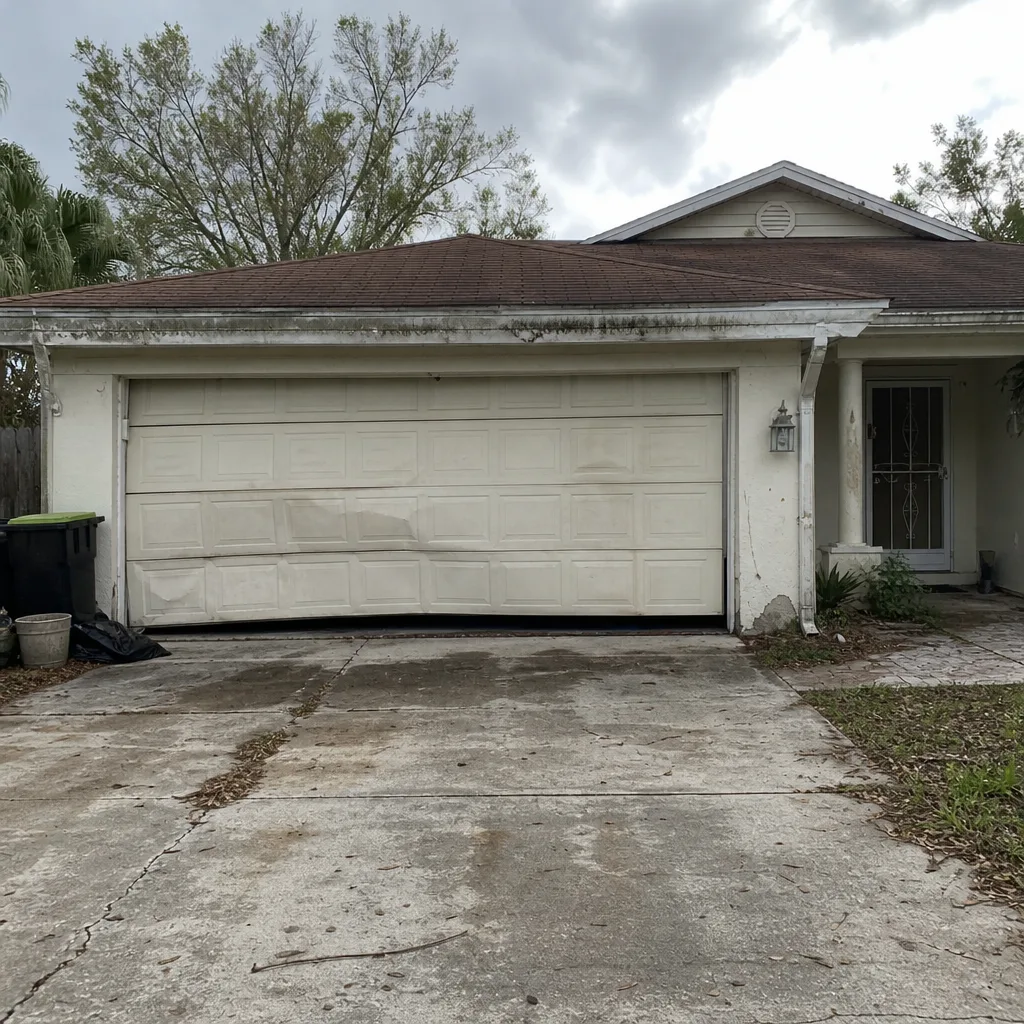 Before
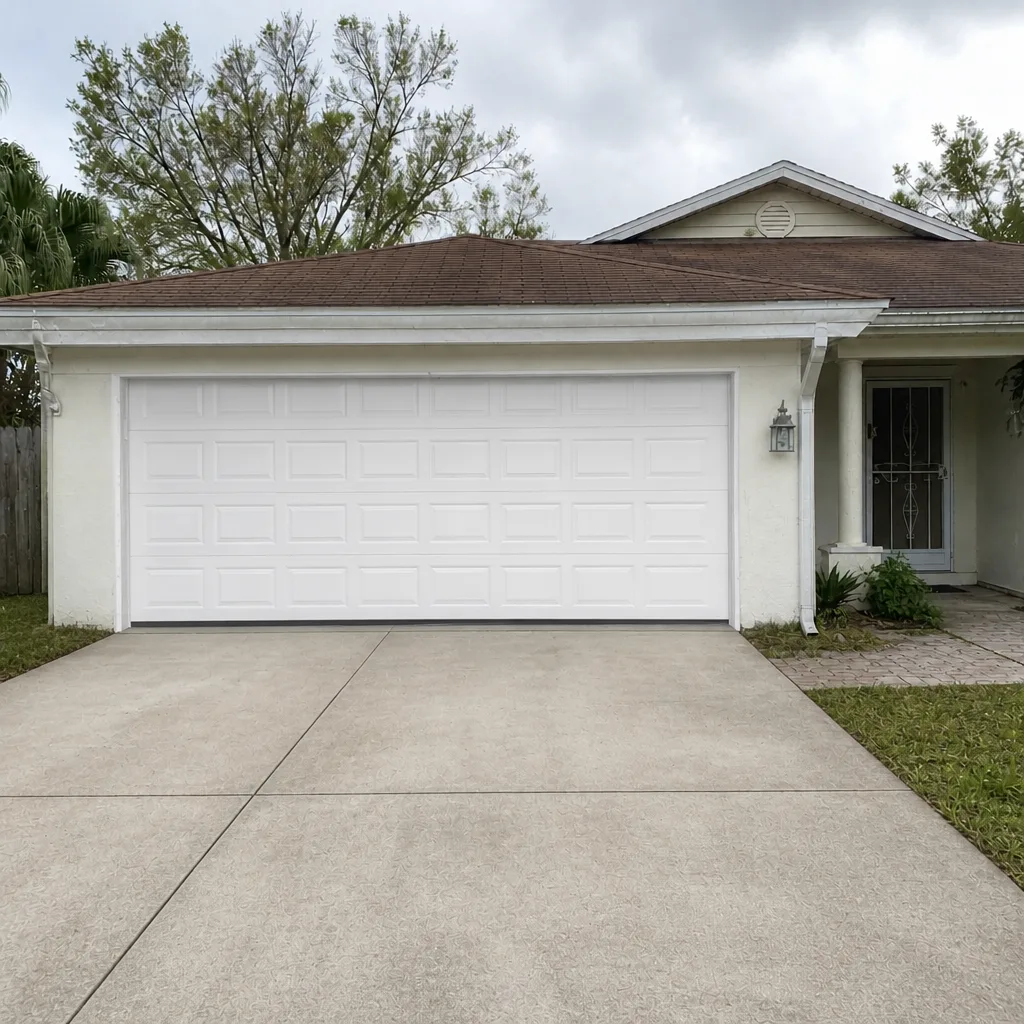 After
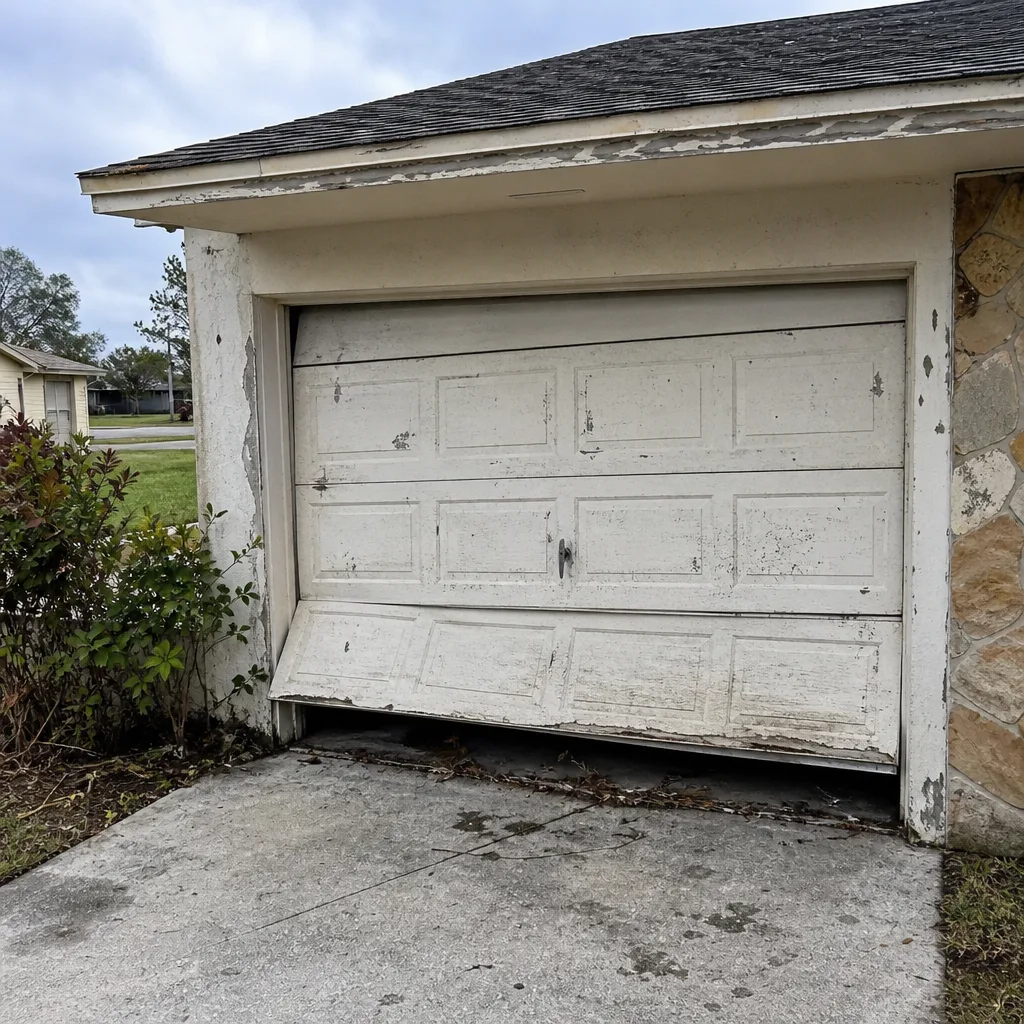 Before
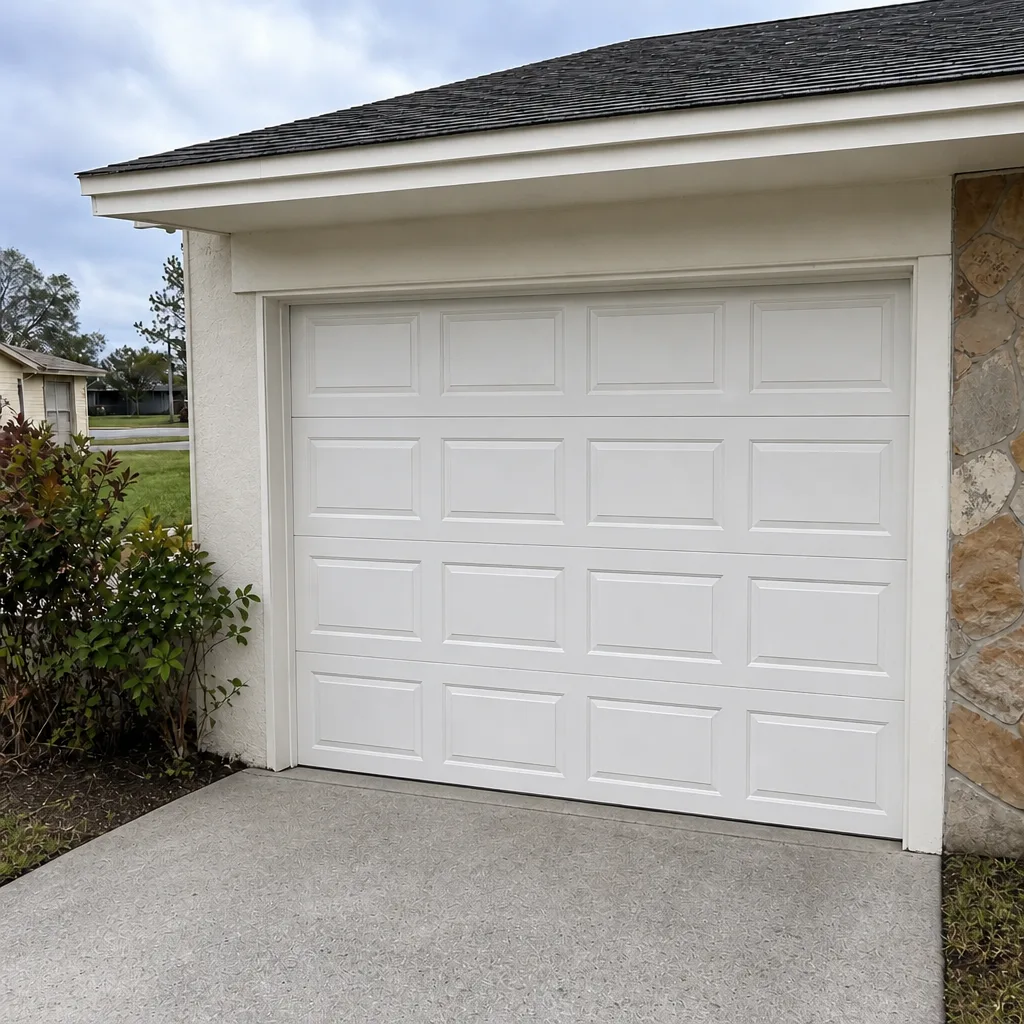 After
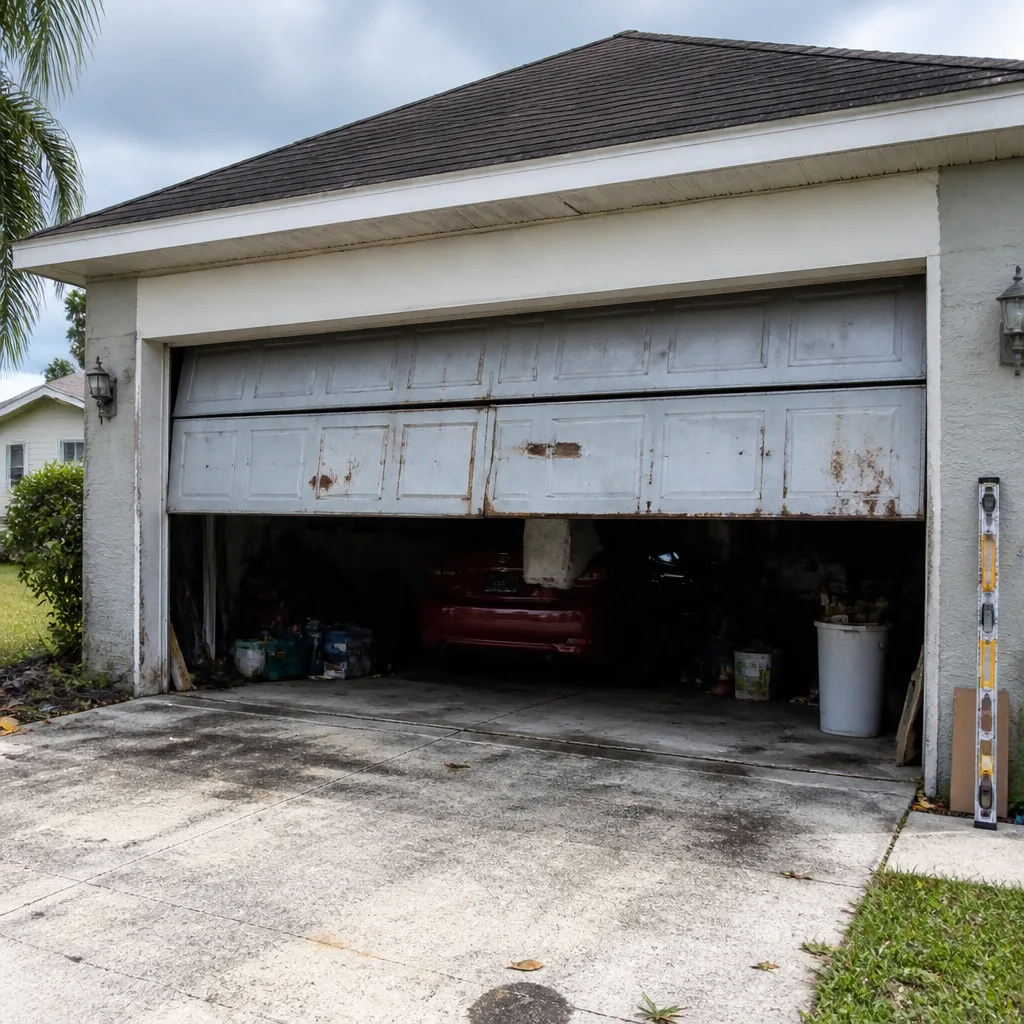 Before
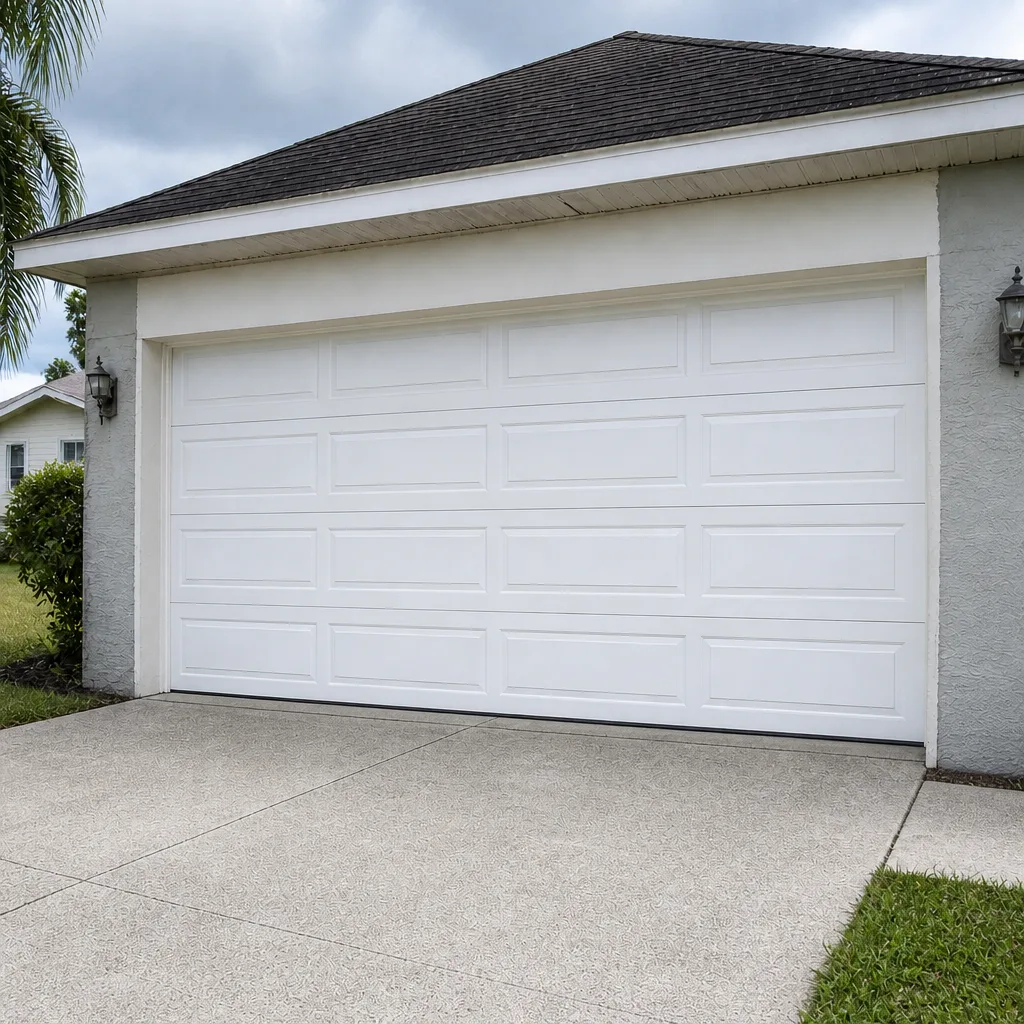 After
When to Call a Professional
Call for a trained inspection when the door has stopped moving entirely, when you’ve heard a pop and the door won’t lift, when either spring has a visible gap, when a cable is frayed, when the door has come off track, or when any impact has moved a panel. Also call when you’ve checked everything and the symptoms don’t quite fit a single cause; a professional diagnosis is faster than guesswork, and it’s what keeps a small issue from becoming an emergency. If the door needs replacing rather than repairing, we handle full garage door installation as well, including panel-based doors from brands like Clopay and Amarr. Garage Door Repair North Fort Myers offers free estimates in North Fort Myers. Call (877) 317-7510.
Frequently Asked Questions
Grinding almost always means a roller has seized or a bearing has dried out, and the door is scraping against the track instead of rolling through it. It’s one of the more fixable warning signs, but it should be addressed quickly because the drag loads the opener motor on every cycle. Call to have it looked at before it takes the track with it.
No. Torsion springs carry enough stored energy to cause serious injury, and adjusting or replacing one requires specialized tools and training. A visual check from a distance is safe; anything beyond that isn’t. Call a professional. This is the exact repair we’d hope no homeowner ever tries.
Most often it’s a safety sensor issue or a down-limit setting that’s slipped, which is an adjustment rather than a mechanical repair. But if the door reverses intermittently and you can see sagging or an uneven gap, the cause may be a spring that’s lost tension. The sensors are easy to rule out, so start there and call if it persists.
Lubrication quiets a door that still lifts smoothly. A spring replacement is due when the door feels heavy to lift by hand, lifts unevenly, or shows a visible gap in the coil. If you’re only hearing squealing and the door operates normally, that’s lubrication. If the balance has changed, that’s the spring.
We work on all the major brands including LiftMaster, Chamberlain, Genie, Clopay, Amarr, Wayne Dalton, Craftsman, and Raynor. Whatever’s already installed in your garage, we work on that brand. No switching, no upsell to a unit you don’t need. Call (877) 317-7510 and describe what you have.
We offer emergency garage door service for situations where access or security can’t wait. When you call, describe what the door is doing – sounds, whether the opener runs, whether the door moves at all – and we can tell you what to expect. Call (877) 317-7510 for a free estimate.
The Bottom Line
Almost every emergency garage door failure starts as a warning sign that was easy to miss or easy to explain away. Grinding means seized rollers. Popping means a broken spring. Squealing means lubrication. Rattling means loose hardware. Uneven lift or a sagging panel means a spring that’s losing tension, and the time to catch that is before the pop. Run the walk-around twice a year, keep the weatherstripping and lubrication in check, and you’ll catch the cheap fixes before they turn into expensive ones. North Fort Myers humidity accelerates some of this and removes other concerns entirely. If something on your door has moved past what you can safely check, don’t guess. Call (877) 317-7510 for a free estimate on garage door repair, opener repair, spring repair, or a full replacement. We work on the brand already in your garage, and we’ll tell you what’s actually wrong.
Written by the team at Garage Door Repair North Fort Myers.